 +86 18751738721
 sales@unitatransformer.com
ChinaUnita Electric developed the SCB18-1000kVA 10kV Class 1 energy efficiency box-type substation. It is a prefabricated power unit specially built for heavy-duty electric truck charging stations.
The core component is the SCB18 Class 1 high-efficiency dry-type transformer. This equipment integrates high-voltage incoming cabinets, low-voltage outgoing cabinets and intelligent protection systems. All assembly and testing are completed inside our factory. After delivery, you only need to finish on-site installation and cable connection. Then the whole system can be put into operation immediately.
Besides, this unit perfectly supports power supply for four sets of 320kW heavy truck DC fast chargers. It works well in many common scenarios. Typical sites include highway service stations, port logistics yards, mining and steel factory transit charging zones. It also fits centralized charging depots for urban muck trucks and concrete mixers.
Our core value: Invest in Class 1 energy efficiency equipment. You can achieve stable operation for up to 30 years. In addition, the saved electricity cost can cover the expense of a new transformer within its service cycle.
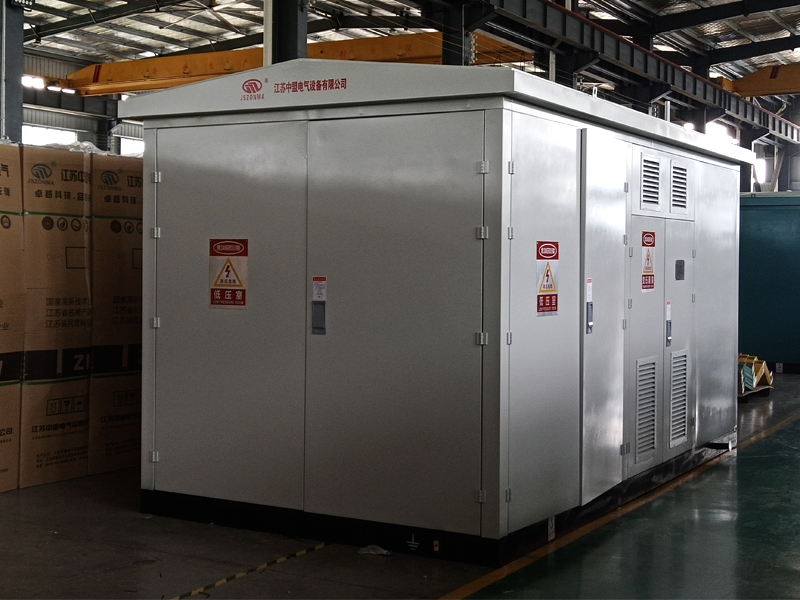
Technical parameters of SCB18-1000kVA prefabricated box substation for heavy truck EV charging station
| Item | Parameter |
|---|---|
| Product Name | Prefabricated Box Substation (Specially for Heavy-Duty Truck Charging Stations) |
| Transformer Model | SCB18-1000kVA/10kV Class 1 Energy Efficiency Dry-Type Transformer |
| Energy Efficiency Grade | Class 1 (GB 20052-2020) |
| Rated Capacity | 1000kVA |
| High Voltage Side | 10kV ± 2×2.5% |
| Low Voltage Side | 0.4kV / 0.69kV (Compatible with 320kW Chargers) |
| Vector Group | Dyn11 |
| Impedance Voltage | 6% |
| High Voltage Switchgear | HXGN17-12 / KYN28A-12 (Optional) |
| Low Voltage Switchgear | GGD / MNS (Optional) |
| Low Voltage Outgoing Circuits | 4 ~ 8 circuits (Customizable) |
| Protection Class | Enclosure IP54 (Standard) / IP65 (High Protection Customization) |
Why Heavy Truck Charging Stations Need Class 1 Energy Efficiency Box Substations
- Continuous high loads amplify the gap between different efficiency levelsFirst of all, charging stations operate under totally different working conditions compared with ordinary factories. Transformers at truck charging stations stay powered nearly all day, and they often run under high load.
Factory transformers usually work at full load for less than 8 hours per day. On the contrary, heavy truck charging stations face high demand for 12 to 16 hours every day. Even during off-peak hours, the transformer remains energized on standby.
Under such continuous working conditions, no-load loss and load loss become very obvious. As a result, the cost difference between Class 1 and Class 3 efficiency transformers will keep growing during long-term operation.
- Real economic comparison: Class 1 SCB18 vs Class 3 SCB11 (1000kVA)We take the 1000kVA dry transformer as an example to make a clear comparison.
The SCB18 model can save around 93,000 USD electricity bills within 10 years. Over its 30-year service life, the total saving reaches nearly 280,000 USD.
It is true that Class 1 box substations cost 3,000–5,000 USD more in initial purchase. However, you can recover this extra investment within 3 to 4 years. After that, you will gain nearly 10,000 USD net savings every year. For 30 years, the accumulated savings can pay for 2 to 3 new transformers.
- Lower temperature rise brings longer service lifeApart from saving electricity, Class 1 efficiency designs offer another big advantage: longer service life.
To explain this point simply, transformer service life mainly depends on insulation materials. The aging speed of insulation is closely related to operating temperature. The power industry follows the well-known “8℃ Rule”. Every 8℃ rise in winding temperature will cut insulation service life in half.
Since SCB18 transformers generate less loss and heat, their winding temperature stays 8–12℃ lower than SCB11 under the same load. Therefore, F-class insulation materials age much more slowly. The designed service life reaches 30 years. In comparison, Class 3 transformers may require major maintenance before operating for 20 years.
Energy consumption comparison between SCB11 Class 3 and SCB18 Class 1 dry-type transformers for heavy truck charging station
| Comparison Item | Class 3 Efficiency (SCB11) | Class 1 Efficiency (SCB18) | Difference |
|---|---|---|---|
| No-load Loss | Approx. 1.55kW | Approx. 0.93kW | Reduced by 40% |
| Load Loss (120℃) | Approx. 8.5kW | Approx. 7.0kW | Reduced by 18% |
| Annual No-load Power Consumption (8760h) | 13,578 kWh | 8,147 kWh | Save 5,431 kWh per year |
| Annual Load Power Consumption (60% Load Factor) | 44,676 kWh | 36,792 kWh | Save 7,884 kWh per year |
| Total Annual Power Consumption | 58,254 kWh | 44,939 kWh | Save 13,315 kWh per year |
| Annual Electricity Cost (0.7 CNY/kWh) | 40,778 CNY | 31,457 CNY | Save 9,321 CNY per year |
In short, electricity savings are visible benefits. Extended service life is a long-term hidden advantage. Project owners should take both factors into account to calculate full lifecycle returns.
Six Targeted Designs For Heavy-Duty EV Charging Scenarios
- Strong overload capacity to handle charging power surgesHeavy truck chargers create impact loads. Once drivers plug in vehicles, charging power rises rapidly, especially when battery level is below 20%. Traditional transformers will trigger alarms and cut power when overload exceeds 1.1 times rated capacity.
By contrast, ChinaUnita SCB18 dry transformers support 1.2 to 1.5 times short-term overload. This design prevents unexpected power outages during peak charging hours.
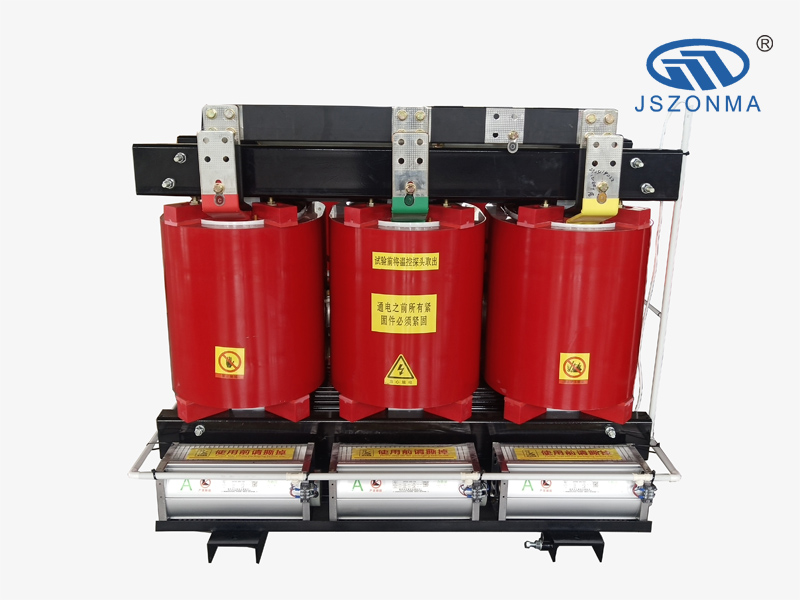
- Full copper winding and vacuum epoxy casting for strong short-circuit resistanceThis transformer uses high-strength double glass covered copper wire. It adopts epoxy resin vacuum casting technology. The casting structure has no bubbles or gaps inside.
Its short-circuit withstand capacity exceeds 25 times rated current, which is higher than national standards. If short-circuit faults occur on the charger side, the transformer can stay safe without winding deformation or burnout.
- Two optional low-voltage output voltages to match different chargers
- 0.4kV (400V): Matches mainstream 320kW DC fast chargers
- 0.69kV (690V): Fits high-power 480kW ultra-fast chargers
You can choose suitable voltage standards freely. There is no need to replace the main transformer to adapt to different charging equipment brands.
- Built-in intelligent monitoring system for unattended managementWe equip each unit with an intelligent power distribution terminal. It monitors multiple operation data in real time:Voltage, current, power and power factorTransformer winding temperature, with automatic alarm and trip protectionLoad rate and load changing trendsSwitch status and fault recordsPower quality data, including harmonic waves and three-phase imbalance
It supports RS485, 4G and fiber communication. Operators can connect the equipment to charging station management platforms. It realizes remote monitoring, early fault warning and unattended operation. This effectively cuts daily maintenance costs and improves station operating efficiency.
- Reserved energy storage interfaces for future expansionNowadays, more charging projects turn into PV-energy storage-charging integrated systems. Considering this trend, our box substation reserves PCS and EMS communication interfaces during design.
Later, you can add energy storage systems without replacing the main transformer. It can reduce reconstruction costs by more than 60%. One-time investment supports long-term capacity upgrade.
- All-weather anti-corrosion cabinet, stable outdoor use for 20 yearsBox substations usually stay outdoors all year round. They face sunlight, rain and frequent temperature changes. Our cabinet receives four layers of anti-corrosion treatment: shot blasting, hot-dip galvanizing, epoxy primer and polyurethane topcoat. It passes the 720-hour salt spray test.
- Standard version: Hot-dip galvanized steel cabinet, anti-corrosion for 20 years in ordinary outdoor areas
- Heavy anti-corrosion version: 304 stainless steel cabinet, suitable for coastal high humidity and high salt environments
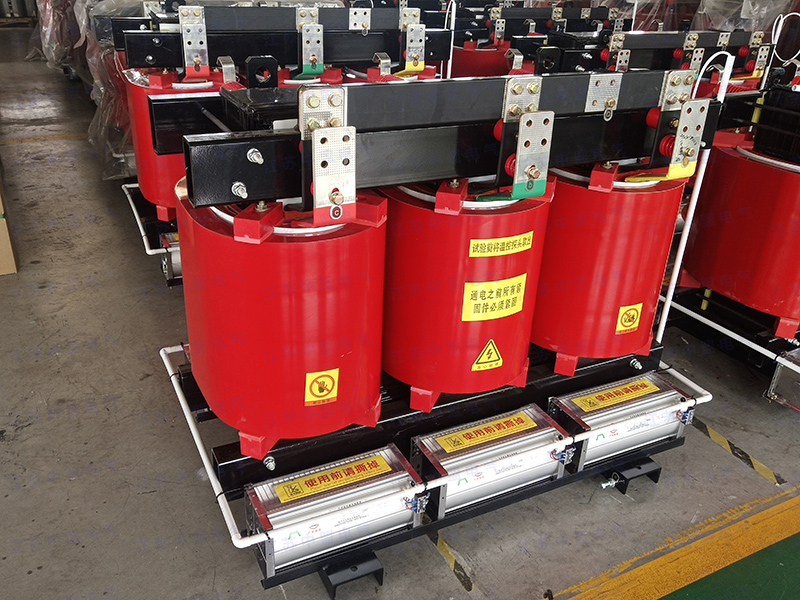
The Difference Between SCB18 and SCB14 Dry Transformers
SCB18 is the upgraded generation of SCB14. It represents the highest efficiency standard for current dry-type transformers. ChinaUnita Electric uses SCB18 as standard configuration for all charging station box substations, to deliver top performance for EV charging projects.
Manufacturer Strength: ChinaUnita Electric
We are an original manufacturer with a complete industrial chain. We independently produce transformers, sheet metal parts and complete power assemblies.
ChinaUnita Electric owns a 46,600 square-meter production base. Our facility covers transformer manufacturing, sheet metal processing, assembly and complete factory testing.
- No middleman markup: Prices are 15%–30% lower than trading companies with the same configuration
- Strict full-process quality control: Key components are self-produced without outsourced assembly
- Reliable delivery cycle: Standard models can be shipped within 7–15 working days
Factory Testing & Quality Commitment
Every SCB18 Class 1 box substation completes 42 full tests before delivery. Main testing items include:
No-load loss and load loss test (to verify energy efficiency level)
42kV/1min power frequency withstand voltage test
Lightning impulse test
Partial discharge test (≤10pC, stricter than national standards)
Winding resistance and transformation ratio test
Protection system linkage test
Communication protocol matching test
Three times power-on impact test
Each device comes with a complete factory test report. All efficiency test data can be tracked and verified.
Written Contract Guarantee
If authorized third-party inspection proves the transformer fails to reach Class 1 efficiency standard, or uses non-full-copper winding. ChinaUnita Electric will bear all inspection fees. We will pay double the price difference as compensation according to the sales contract. We provide reliable commitments formally written into contracts.