+86 18751738721
 sales@unitatransformer.com
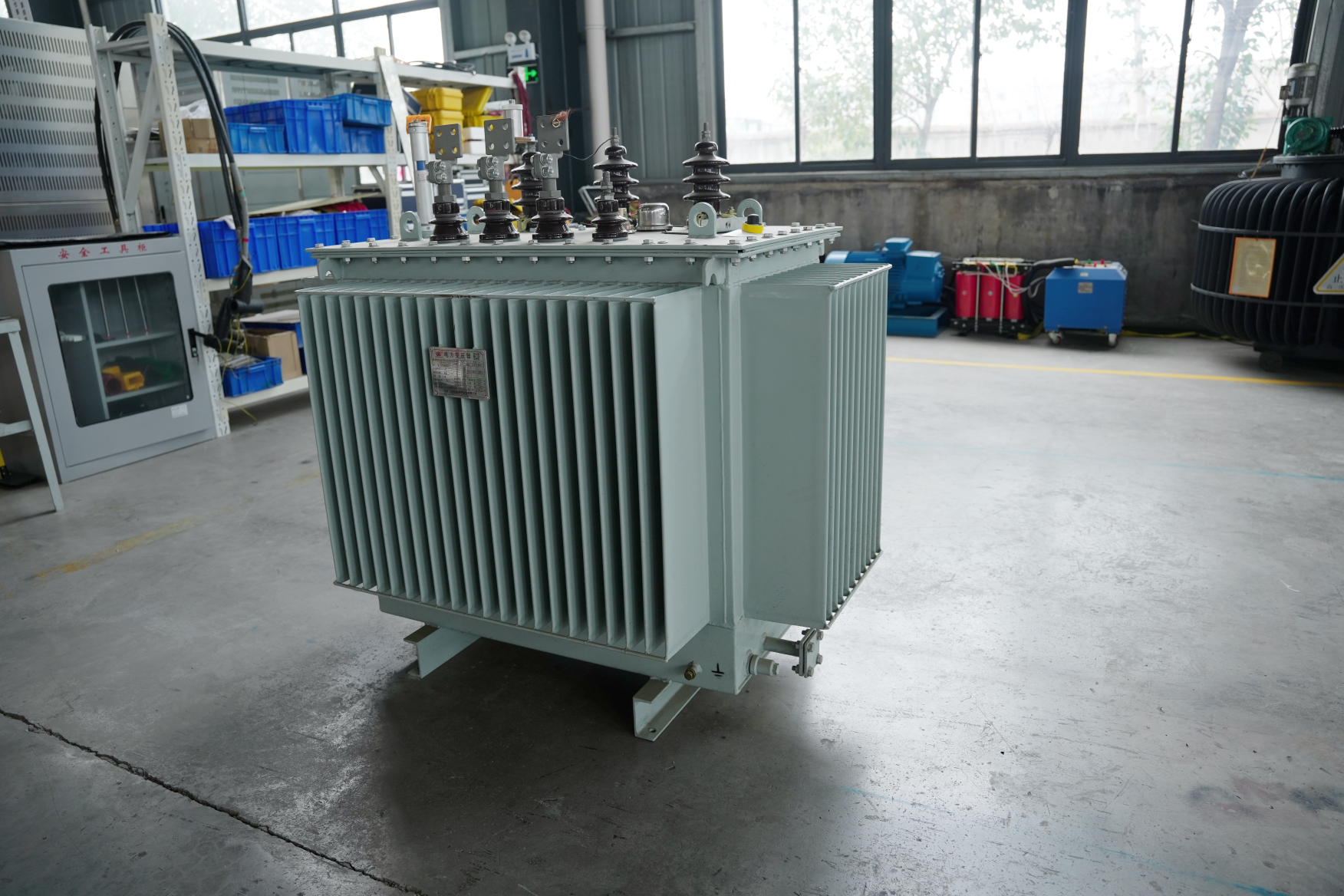
When selecting a transformer for your African project, one of the most important decisions is choosing between single-phase and three-phase units. Many project managers in Africa make the mistake of choosing the wrong phase type, leading to inefficiency, equipment damage, and costly rework. This guide explains the key differences between single-phase and three-phase 11kV 100kVA transformers, and how to choose the right one for your African project.
First, it’s critical to note that both single-phase and three-phase transformers for African projects must be CE certified—this ensures compliance with international safety standards and compatibility with local equipment, regardless of phase type. CE certification guarantees that the transformer is built to handle Africa’s harsh conditions and variable power demands.
Key Differences: Single-Phase vs. Three-Phase 11kV 100kVA Transformers
表格
| Feature | Single-Phase 11kV 100kVA Transformer | Three-Phase 11kV 100kVA Transformer |
|---|---|---|
| Power Delivery | Delivers power through two wires (one phase, one neutral) | Delivers power through three wires (three phases, one neutral) |
| Ideal Use Case | Small, low-power applications: rural homes, small shops, single-building clinics | Medium-to-high power applications: industrial facilities, multi-building complexes, large rural communities, mining sites |
| Efficiency | Less efficient for high loads (wastes more energy) | More efficient for high loads (minimizes energy loss) |
| Equipment Compatibility | Works with single-phase equipment (e.g., small lights, phone chargers, single-phase pumps) | Works with three-phase equipment (e.g., industrial machinery, large pumps, multi-building HVAC systems) |
| Installation Complexity | Simple, requires less wiring | More complex, requires three-phase wiring (needs qualified technicians) |
| Cost | Lower upfront cost | Slightly higher upfront cost, but more cost-effective for high loads |
How to Choose the Right Phase Type for Your African Project
- Rural Homes & Small Communities: Single-phase 11kV 100kVA transformers are ideal for small rural communities (100–150 homes) with basic power needs (lighting, small appliances, phone charging). They are simple to install, low-cost, and CE certified units are readily available.
- Small Businesses & Single-Building Clinics: Single-phase transformers work well for small businesses (tailors, carpenters) and single-building clinics, where power needs are low and equipment is single-phase.
- Industrial Facilities & Large Communities: Three-phase 11kV 100kVA transformers are necessary for industrial facilities (manufacturing, mining), large rural communities (200+ homes), and multi-building complexes (schools, hospitals). They handle high loads more efficiently, power three-phase equipment, and reduce energy waste—critical for large-scale African projects.
- Future Growth: If your project is expected to grow (e.g., a rural community expanding, a small business scaling up), choose a three-phase transformer. It can handle increased loads and is compatible with more advanced equipment, avoiding the need to replace the transformer later.
Common Mistake to Avoid
Many project managers in Africa choose single-phase transformers for large projects to save upfront cost, only to find that the transformer is overloaded, inefficient, and unable to power three-phase equipment. This leads to costly replacements and project delays. Always match the phase type to your current and future power needs.
Conclusion
Choosing between single-phase and three-phase 11kV 100kVA transformers depends on your project’s power needs, equipment, and future growth. Both types should be CE certified to ensure reliability and compliance in African markets. By selecting the right phase type, you can ensure your transformer is efficient, compatible, and built to last.