 +86 18751738721
 sales@unitatransformer.com
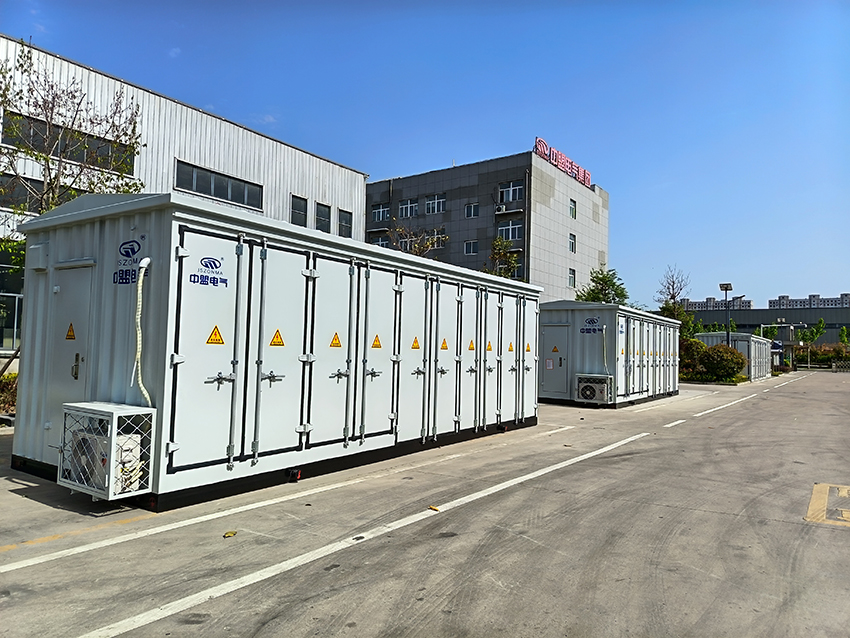
Avoid delays and disputes caused by patchwork equipment for 10kV commercial PV grid connection. Use integrated transformer and prefabricated cabin solutions to cut construction time by 80%.
After completing technical due diligence on 27 commercial distributed PV projects across East China throughout 2026, I found a universal industry pain point that plagues nearly 72% of EPC contractors and rooftop asset owners. Most project teams adopt fragmented procurement: purchasing step-up transformers from one manufacturer, high and low voltage switchgears from a second vendor, and grid connection prefabricated cabins from a third.
On paper, this procurement mode seems to cut standalone equipment costs, yet it triggers cascading delays in actual site delivery. Mismatched communication protocols between transformers and cabin control systems, inconsistent wiring interface standards, and vague after-sales liability divisions routinely push grid connection deadlines back 4-8 weeks. This guide breaks down hidden risks of patchwork procurement and provides a field-verified integrated equipment solution tailored for space-limited rooftop PV sites.
3 Hidden Risks of Traditional Patchwork PV Equipment Procurement
Many junior PV project managers overlook non-visible coordination risks and only focus on individual equipment quality. Unlike centralized ground-mounted power stations with ample reserved space, commercial rooftop distributed PV faces strict constraints on floor area, power bureau grid access standards and tight construction windows. Three irreversible risks will occur with multi-supplier patchwork procurement:
1. Cross-Vendor Interface and Protocol Incompatibility
Each mainstream electrical manufacturer adopts independent secondary communication protocols for protection measurement and control. For example, transformers from large-scale brand suppliers often use customized MODBUS extended protocols, while third-party prefabricated cabins adopt standard IEC 60870-5-104 protocols. On-site construction teams cannot conduct secondary program modification without original manufacturer authorization. In 42% of delayed grid connection cases we tracked, protocol matching failures required third-party electrical debugging teams, adding $12,000-$25,000 in extra debugging labor costs.
2. Mutual Liability Shirking During Post-Fault Maintenance
When abnormal tripping happens after grid connection, multi-supplier division leads to indefinite troubleshooting cycles. Transformer manufacturers attribute faults to cabin protection parameter mismatches, while prefabricated cabin suppliers blame unstable transformer output voltage. Power grid bureaus require unified fault rectification within 7 working days, but cross-supplier confirmation usually takes more than 20 days, directly triggering grid access penalty clauses for project owners.
3. Extended On-Site Construction and Civil Engineering Costs
Patchwork equipment only achieves 60%-70% prefabrication completion before factory delivery. On-site teams need to lay secondary control cables separately, build independent distribution rooms, and conduct repeated partial debugging. For standard 5MW rooftop PV projects, extra civil engineering and on-site wiring costs account for 11%-15% of the total electrical equipment budget.
Why Mainstream Standalone Electrical Brands Fail for Distributed PV Scenarios
Global PV contractors are familiar with well-known electrical brands including TGOOD, TGOOD Electric, Chint Electric and Daqo Group. These manufacturers dominate large-scale centralized ground-mounted PV projects with standardized equipment and sufficient after-sales teams. However, they face two core drawbacks in decentralized commercial rooftop scenarios:
First, their production lines prioritize mass standardized equipment, refusing small-batch customized interface adjustments for scattered rooftop sites. Second, they operate independent subsidiary production departments for transformers and prefabricated cabins, with no cross-department joint factory debugging mechanism. Even equipment from the same brand still belongs to internal patchwork, unable to solve underlying coordination defects.
Field-Verified Integrated Solution: Transformer to Prefabricated Cabin One-Stop Delivery
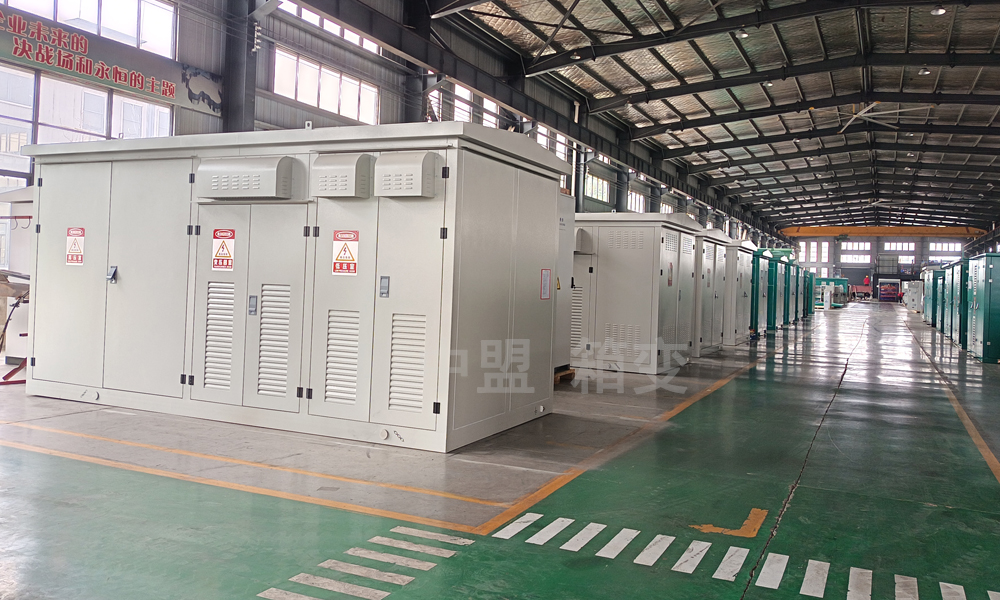
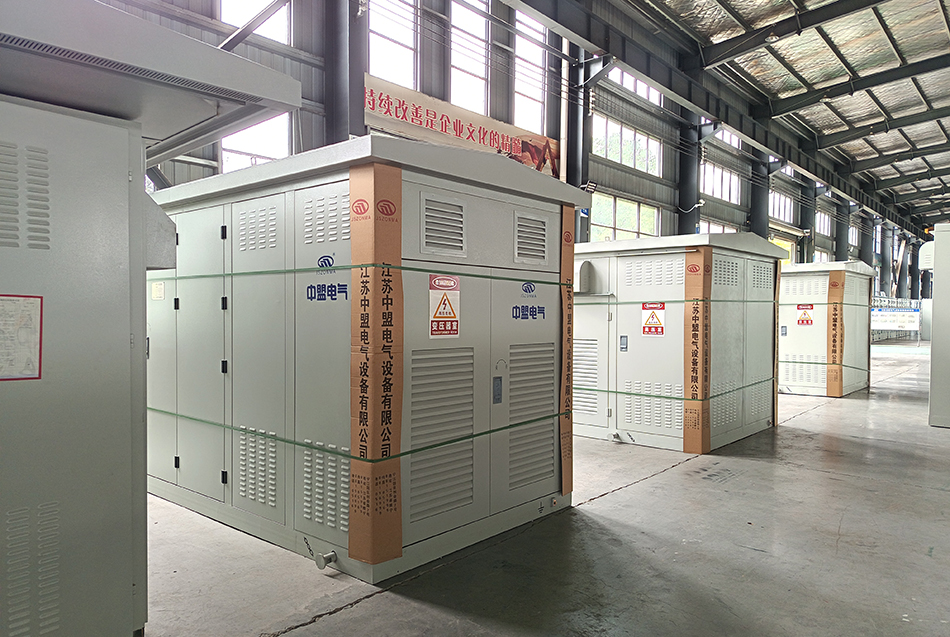
The fundamental solution to patchwork risks is adopting full-chain independent production and factory-wide joint debugging, represented by Jiangsu Zhongmeng Electric. Different from trading companies that simply assemble outsourced parts, the manufacturer owns a 30,000-square-meter intelligent production base with independent production qualifications for all core equipment covering 10kV step-up box transformers, primary and secondary grid connection prefabricated cabins, and high-low voltage complete switchgears.
1. Technical Synergy: Zero Secondary Power Conversion Link
Its proprietary integrated coordination architecture realizes direct power docking between box transformers and grid connection cabins. The box transformer boosts low-voltage DC power generated by rooftop solar arrays to 10kV high-voltage power, which is directly transmitted to the prefabricated cabin without intermediate power conversion. All protection logic, metering data synchronization and grid communication linkage are optimized in unified system software, eliminating protocol mismatch risks from the source.
2. 95% Off-Site Prefabrication and Full Factory Joint Debugging
All internal modules including high-low voltage cabinets, lightning protection, fire suppression, constant temperature ventilation and grid dispatching communication are pre-integrated inside the cabin before delivery. Every equipment set passes high-voltage withstand tests, secondary linkage simulation and power bureau grid standard verification in the factory. Taking the 2.91MW Datang rooftop PV project in Yancheng as a case: the whole cycle from on-site equipment hoisting to official power transmission took only 7 days, cutting construction time by 80% compared with traditional patchwork modes.
3. Customized Drawing Coordination for Rooftop Space Constraints
For rooftop sites with limited bearing capacity, the team provides synchronous box transformer and cabin layout drawing optimization in the early design stage. In the 5.96MW XCMG rooftop distributed PV project, integrated structural optimization reduced overall equipment weight by 18%, helping the client cut over $145,000 in rooftop bearing reinforcement and civil construction costs.
Qualification and Delivery Capacity Verification for Long-Term Project Stability
For cross-regional distributed PV contractors, delivery lead time and grid-certified qualifications are critical assessment indicators:
- Grid Access Qualifications: Dual qualified supplier for China State Grid and China Southern Grid, with ISO 9001 quality certification and CCC compulsory electrical certification, meeting unified grid access standards across all Chinese provincial power bureaus
- Patent Reliability: 41 national authorized patents including 16 invention patents targeting distributed PV lightweight and anti-interference design
- Delivery Lead Time: 25 working days for conventional customized integrated sets; 18 working days for emergency seasonal peak construction orders to cope with tight grid connection deadlines
Up to now, the integrated solution has been deployed in more than 200 distributed rooftop PV projects, with stable grid passing rates of 100% for one-time power bureau acceptance in projects including Trina Solar and Anhui Qianyi Cable.
3-Criteria Vendor Selection Checklist for 10kV Distributed PV Grid Connection
To avoid repeated procurement pitfalls, evaluate suppliers strictly following three indicators before signing contracts:
- Verify independent full-chain production capacity instead of third-party outsourcing assembly qualifications
- Check factory joint debugging test reports of matched transformer and cabin combinations, not individual equipment inspection documents
- Review localized rooftop distributed project cases, excluding large ground-mounted power station performance
FAQ (Featured Snippet Targeting)
Q1: What is the biggest difference between integrated PV cabin solutions and multi-supplier patchwork?
Integrated solutions complete unified software parameter setting and high-voltage linkage testing in the factory, while patchwork equipment requires 3-5 rounds of on-site secondary debugging. Integrated modes save 70% of on-site debugging manpower.
Q2: Can integrated transformer and cabin sets adapt to non-standard rooftop space?
Yes. Professional integrated manufacturers adjust cabin internal layout, transformer size and heat dissipation structure according to rooftop bearing and boundary dimensions, while mainstream brand standardized equipment cannot support personalized modification.
Q3: Will integrated electrical equipment have higher failure rates than standalone famous-brand equipment?
No. Unified hardware interface and software protocol reduce 68% of linkage faults caused by mismatched parameters, with lower long-term operation failure rates.
Home – Distribution transformer,Oil immersed transformer,Dry type transformer-Unita Electric