 +86 18751738721
 sales@unitatransformer.com
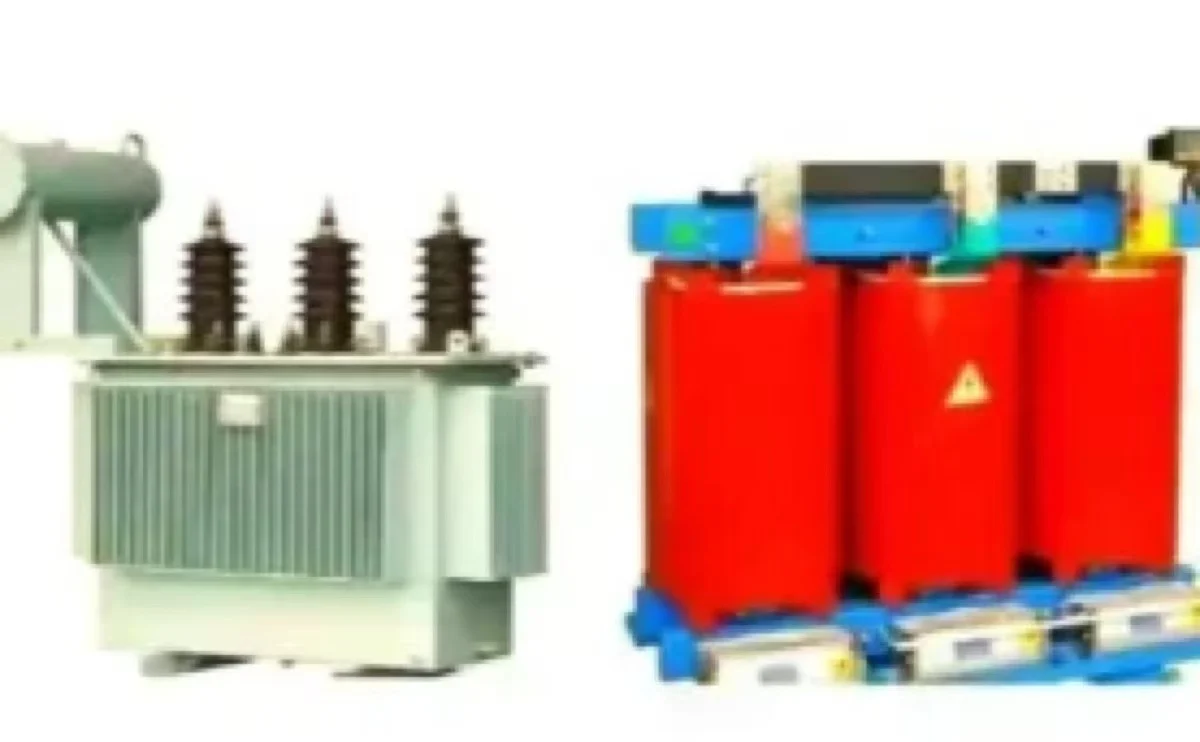
Pillar page — replaces 13 spun “dry-type vs oil-immersed” posts. Publish at:
https://www.unitatransformer.com/dry-type-vs-oil-immersed-transformers-key-differences-amp-how-to-choose/
Set the other 13 URLs to 301 redirect here.
Meta title (≤60): Dry-Type vs Oil-Immersed Transformers: How to Choose (2026)
Meta description (≤160): Dry-type or oil-immersed transformer? Compare cooling, fire safety, maintenance, cost and IEC/GB standards by application — with a decision table for solar, mining and humid climates.
Which one do you actually need?
If you are specifying a distribution transformer (10 kV / 20 kV / 35 kV, 50 kVA–4000 kVA), the dry-type vs oil-immersed decision is rarely about “which is better” — it is about where the unit sits, what can happen if it fails, and who maintains it. This guide gives you a repeatable selection method used by EPC buyers and distributors, then a decision table mapped to real project environments (Middle East, Africa, Central Asia, commercial solar, data centers).
Quick rule: Indoor, occupied or fire-sensitive = dry-type. Outdoor, harsh, high-capacity, cost-driven = oil-immersed. Everything below explains the exceptions.
1. How they work (and why it changes the decision)
| Factor | Dry-Type (Cast-Resin / VPI) | Oil-Immersed (ONAN) |
|---|---|---|
| Cooling / insulation | Air, resin-encapsulated windings | Mineral / ester oil bath |
| Fire load | Very low, self-extinguishing | Combustible oil → fire-rated pit / bunding |
| Typical range | 100 kVA – 4000 kVA, up to 35 kV | 50 kVA – 4000 kVA+ (easier at large kVA) |
| Environment | Indoor, clean, ventilated | Outdoor, dusty, humid, temperature-swing |
| Maintenance | Minimal — visual + IR scan | Oil level, DGA, breather, leak checks |
| Overload | Lower thermal headroom | Higher short-term overload capability |
| Standards | IEC 60076, GB 20052, EN 50588 | IEC 60076, GB 1094, IEEE C57.12 |
| CAPEX | Higher per kVA | Lower per kVA |
| Footprint | Needs ventilation clearance | Compact, weatherproof tank |
Both types from VoltCloud Electric are routinely type-tested to IEC 60076 / GB 20052 and delivered with routine test reports.
2. The 5 questions that decide it
Q1 — Is the location indoor and occupied?
Hospitals, malls, data centers, underground substations: choose dry-type. No oil = no fire-suppression pit, easier code compliance (EN 50588 low fire load).
Q2 — Is it outdoor or in a harsh environment?
Mining, desert (MENA), coastal humidity (SE Asia), rural grids: oil-immersed tolerates dust, temperature swing and vibration better, and a sealed tank resists ingress.
Q3 — What is the maintenance capability on site?
If the buyer has no trained staff for oil sampling / DGA, dry-type reduces lifecycle risk. If they run a utility or plant with a maintenance team, oil-immersed is manageable and cheaper at scale.
Q4 — What is the kVA and voltage?
Above ~2500 kVA or 35 kV, oil-immersed is usually the economical and thermally proven choice; dry-type is available but CAPEX rises steeply.
Q5 — What do local standards / the utility require?
Some markets mandate specific loss classes (e.g. GB 20052-2024 NX1/NX2/NX3 in China, DOE 2016 in the US, EU Ecodesign). Confirm the efficiency class before quoting — it changes the core design, not just the label.
3. By project type (decision table)
| Application | Recommended | Why |
|---|---|---|
| Commercial building / hospital | Dry-type (SCB13/14) | Fire safety, indoor, low noise |
| Data center | Dry-type, forced-air | No fire load, redundant cooling |
| Solar PV step-up / BESS | Oil-immersed (S13/S20) | Outdoor, thermal cycling, cost |
| Wind farm substation | Oil-immersed | Remote, harsh, low maintenance visits |
| Mining / heavy industrial | Oil-immersed, sealed | Dust, vibration, overload |
| Underground / urban grid | Dry-type or pad-mounted oil | Space + fire code |
| Rural distribution (pole/ground) | Oil-immersed | CAPEX, durability |
| Middle East (high ambient) | Oil-immersed (C4 anti-corrosion) | Heat, sand, outdoor |
| Africa (humid / remote) | Oil-immersed, sealed | Humidity, sparse maintenance |
| Central Asia (cold) | Oil-immersed, low-temp oil | −20 °C to +45 °C operation |
4. Cost reality (not just sticker price)
Oil-immersed wins CAPEX. But total cost of ownership includes:
- Dry-type: higher purchase, near-zero fire-safety civil works, low maintenance.
- Oil-immersed: lower purchase, but fire pit / bunding, oil monitoring, eventual oil handling.
For a 1000 kVA unit, the “cheap” oil unit can cost more over 15 years if the site needs fire-rated civil works and frequent sampling. Decide on TCO, not unit price — and watch no-load losses: a low-price model with high no-load loss bleeds money every year (see our 1000 kVA loss analysis).
5. Common mistakes buyers make
- Choosing on price only → high no-load losses, higher lifetime cost.
- Dry-type outdoors without enclosure → moisture ingress, tracking failure.
- Oil unit indoors without bunding → code violation, insurance risk.
- Ignoring the efficiency class → fails tender loss limits.
- No routine test report → rejected at customs / commissioning.
6. VoltCloud Electric — what we supply
- Dry-type: SCB10 / SCB11 / SCB12 / SCB13 (cast-resin), 100–4000 kVA, up to 35 kV, Class F/H, IP-rated enclosures.
- Oil-immersed: S11 / S13 / S20, 50–4000 kVA, sealed corrugated-tank, optional ester fluid for bio/fire safety.
- Standards: IEC 60076, GB 1094 / GB 20052-2024, optional IEEE / CE per market.
- Deliverables: type-test report, routine test records, qualification certificates, installation guidance.
👉 Need a spec check for your project? Request a quote →
FAQ
Q: Can a dry-type transformer be installed outdoors?
A: Yes, inside a weatherproof IP-rated enclosure with ventilation and heater — but CAPEX rises. For truly outdoor/harsh sites, oil-immersed is usually simpler.
Q: Which lasts longer?
A: Both reach 20–25 years with proper care. Oil-immersed tanks resist environment better outdoors; dry-type avoids oil degradation entirely.
Q: Is dry-type safer?
A: In occupied/indoor spaces, yes — no combustible oil, very low fire load, self-extinguishing resin.
Q: Why is oil-immersed cheaper?
A: Air cooling + resin encapsulation costs more per kVA; oil is a cheap, effective coolant, so large units are economical.
Q: Do you build to IEC and IEEE?
A: Standard IEC 60076 / GB; IEEE C57 and CE/UL available on request for export tenders.
7 thoughts on “Oil-Immersed vs Dry-Type Transformer: Efficiency”
Comments are closed.