 +86 18751738721
 sales@unitatransformer.com
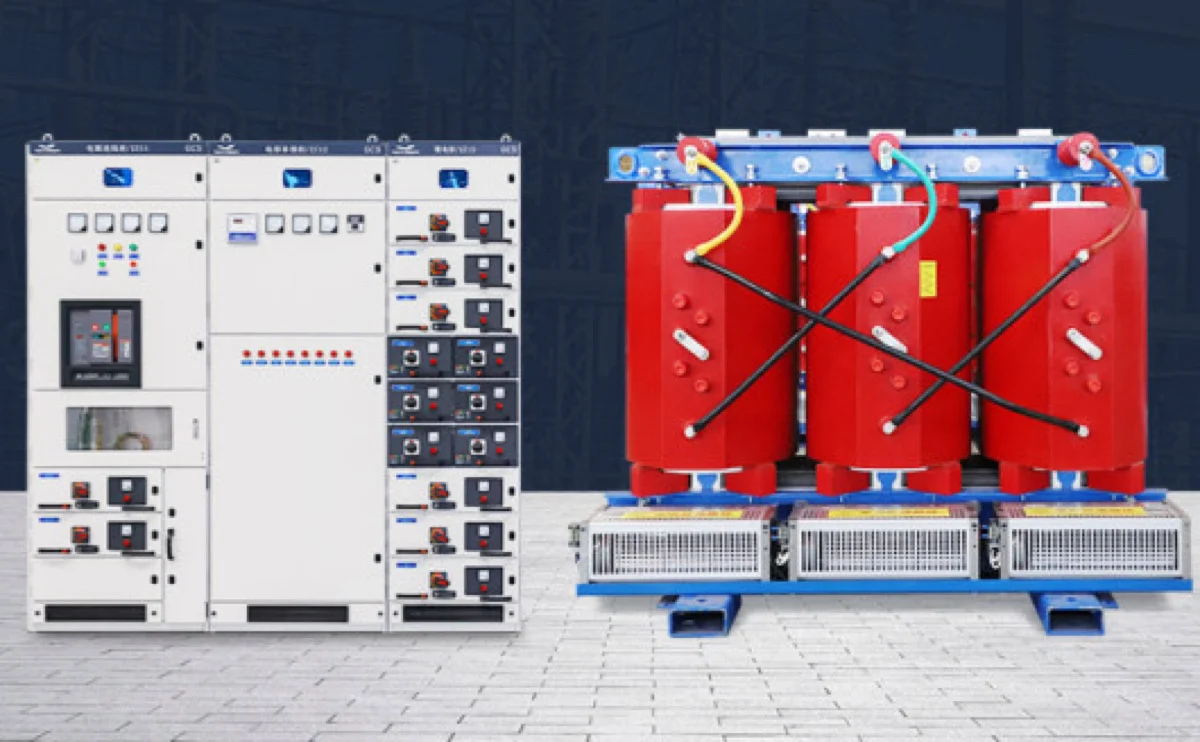
Explore the core advantages, working principles, and wide applications of dry-type transformers. This in-depth analysis explains why SCB series dry-type transformers are the safe and efficient choice for commercial buildings, data centers, and industrial applications, helping you make an informed decision.
What is a Dry-Type Transformer?
A dry-type transformer, as the name suggests, is a transformer whose core and windings are not immersed in insulating oil but are instead encapsulated or impregnated with solid insulating materials like epoxy resin. Its key difference from traditional “oil-immersed transformers” is that it uses air as the cooling medium instead of insulating oil. Consequently, it offers significant features such as fire resistance, explosion-proof operation, and zero pollution, making it particularly suitable for indoor locations with high safety and environmental requirements.
How Does a Dry-Type Transformer Work?
The fundamental working principle of a dry-type transformer is the same as all transformers, following Faraday’s Law of Electromagnetic Induction.
- The primary winding is connected to an AC power source, creating an alternating magnetic field.
- This alternating magnetic field forms a magnetic circuit through the core (made of laminated high-permeability silicon steel sheets).
- The alternating magnetic field in the core cuts the secondary winding, thereby inducing an electromotive force (voltage) in the secondary winding.
- By adjusting the turns ratio between the primary and secondary windings, voltage can be stepped up or down.
The core innovation lies in how dry-type transformers use advanced insulating materials and manufacturing processes to ensure the windings can safely and stably withstand high voltage and large currents even in an air environment.
Key Advantages and Features of Dry-Type Transformers
Why are dry-type transformers becoming increasingly popular in modern power systems? It’s primarily due to the following major advantages:
- High Safety:
- Fire and Explosion Proof: The absence of flammable insulating oil eliminates the risks of fire and explosion at their source.
- Pollution-Free: No risk of oil leaks, making them environmentally friendly and truly “green” transformers.
- Exceptional Reliability:
- High Shock Resistance: Windings are cast in epoxy resin or processed by Vacuum Pressure Impregnation (VPI), giving them high mechanical strength and the ability to withstand strong short-circuit current impacts.
- Moisture and Dust Resistance: High insulation class (typically Class F or H), offering good resistance to moisture and contamination, suitable for harsh environments.
- Easy Maintenance:
- Low Maintenance: No need for regular checks of oil levels, filtering insulating oil, or oil testing as required for oil-immersed transformers, significantly reducing maintenance costs and efforts.
- Easy Installation: Relatively lightweight, no need for separate oil pits and drainage facilities, flexible installation location, saving space.
- Excellent Environmental Performance:
- Materials are recyclable, and they do not create hazardous waste at the end of their life cycle.
- Good Energy Efficiency:
- Modern advanced dry-type transformers (e.g., SCB14, SCB18 series) use low-loss materials like amorphous metal cores, resulting in very low no-load and load losses. They comply with national energy efficiency standards and offer significant energy savings.
Types of Dry-Type Transformers
They are mainly divided into two categories:
- Cast Resin: This is the most mainstream technology today. The windings are sealed and molded using glass fiber reinforced epoxy resin under vacuum conditions. Its advantages are high dielectric strength, moisture proof, corrosion resistance, low noise, and minimal maintenance. The common SCB series transformer is a prime example.
- Vacuum Pressure Impregnated (VPI): The windings are impregnated with insulating varnish under vacuum pressure multiple times and then baked to solidify. Its characteristics are better heat dissipation, a relatively simpler process, and lower cost.
Applications of Dry-Type Transformers
Due to their safe and reliable nature, dry-type transformers are widely used in the following applications:
- Commercial and Public Buildings: Power distribution systems in densely populated areas like office buildings, shopping malls, hotels, hospitals, schools, stadiums, airports, and subway stations.
- Data Centers and Communication Hubs: Critical facilities with extremely high requirements for power supply continuity and safety.
- Industrial Sector: Factories and plants in industries with explosion risks or harsh environments, such as mining, oil fields, chemical, and metallurgy.
- Renewable Energy Generation: Step-up systems for wind farms and photovoltaic power plants, favored for their environmental friendliness and ease of maintenance.
How to Choose the Right Dry-Type Transformer?
When selecting a dry-type transformer, consider the following key factors:
- Rated Capacity (kVA): Calculate the total requirement based on the actual load, including an appropriate margin for future development.
- Voltage Rating (kV): Define the input (primary) and output (secondary) voltage requirements.
- Energy Efficiency Class: Choose products that comply with the latest national energy efficiency standards (e.g., Level 1 or Level 2 per GB 20052 in China), which can save significant electricity costs over the long term.
- Protection Class (IP Code): Select the appropriate enclosure protection rating based on the installation environment (e.g., IP20 for indoor use, IP23 for outdoor use where moisture might be present).
- Cooling Method: Common types are AN (Air Natural) and AF (Air Forced). Forced air cooling can temporarily increase the transformer’s load capacity.
- Brand and Quality: Choose a manufacturer with a good reputation, mature technology, and reliable after-sales service.
Conclusion
With their outstanding characteristics of safety, environmental protection, reliability, and high efficiency, dry-type transformers have become indispensable core equipment in modern urban power distribution, infrastructure, and industrial sectors. As technology continues to advance and energy efficiency and environmental requirements increase, new products like amorphous metal dry-type transformers with superior performance and lower losses will have even broader application prospects. Choosing the right dry-type transformer for your project is a crucial step in building a safe, stable, and green power system.