 +86 15852255369
 sales@unitatransformer.com
This white paper systematically elaborates the technological system of intelligent oil-immersed transformers for new power systems, proposing a three-dimensional development path of “comprehensive condition perception – deep data mining – autonomous decision optimization”. Research shows that transformers adopting next-generation intelligent technologies can improve energy efficiency by 3-5 percentage points, extend service life by 8-10 years, and reduce maintenance costs by over 40%.
Chapter 1 Industry Status and Technical Challenges
1.1 Market Supply-Demand Analysis
• Global market size: Reached $21.8 billion in 2023, with a CAGR of 5.7% (2024-2030)
• Energy efficiency standard evolution: Upgrade roadmap from IE1 to IE4
• Pain point analysis: Three major challenges in environmental compliance, energy efficiency improvement, and intelligent transformation
1.2 Technological Bottleneck Breakthroughs
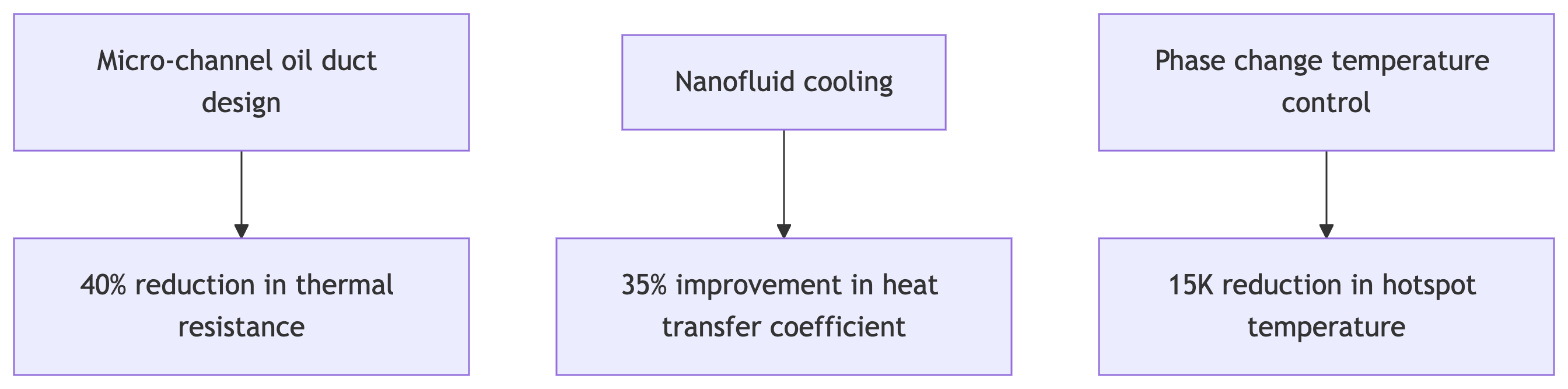
- Heat dissipation efficiency limit: Thermal resistance coefficient of existing oil duct design ≥0.25K/W
- Insulation material constraints: Traditional insulation paper thermal aging life <30 years
- Condition assessment blind spots: Existing monitoring parameter coverage <65%
Chapter 2 Core Technological Breakthroughs
2.1 Innovative Cooling Technologies
2.2 New Insulation System
- Cellulose/polypropylene composite insulation paper: Temperature rating increased from 105°C to 130°C
- Boron-nitrogen modified insulating oil: Breakdown voltage ≥75kV/2.5mm
- Self-healing insulation coating: Micro-crack self-repair rate >90%
2.3 Intelligent Sensing System
“Five-dimensional sensing” technology matrix:
- Electromagnetic sensing (0.1Hz-1MHz wideband measurement)
- Thermal sensing (distributed optical fiber temperature measurement)
- Mechanical sensing (MEMS vibration monitoring)
- Chemical sensing (online chromatographic analysis)
- Environmental sensing (meteorological parameter fusion)
Chapter 3 Digital Twin Platform
3.1 Architecture Design
3.2 Core Functions
- Real-time simulation: Electromagnetic-thermal-mechanical coupling calculation with time step ≤1ms
- Predictive maintenance: LSTM-based RUL prediction error <5%
- Virtual commissioning: Reduces field commissioning time by 60%
Chapter 4 Typical Application Scenarios
4.1 Renewable Energy Plants
│── Photovoltaic plants: Adapt to ±10% voltage fluctuation
│── Wind farms: Short-circuit withstand capacity ≥25kA/2s
└── Energy storage systems: Cycle efficiency >99%
4.2 Urban Power Grids
• Intelligent voltage regulation: 0.5% voltage adjustment accuracy
• Load forecasting: 24-hour error <3%
• Fault isolation: Operation time <20ms
Chapter 5 Standards and Testing
5.1 New Testing System
tabular
Test Item         | Traditional Method | Intelligent Testing Solution
------------------|-------------------|-----------------------------
Temperature Rise  | Point measurement | 3D thermal field reconstruction
Short Circuit     | Single test       | Digital twin simulation
Life Assessment   | Accelerated aging | Multi-factor coupling model
5.2 Certification Standards
- IEC 60076-27:2024 Standard for Intelligent Transformers
- IEEE C57.156-2023 Guide for Digital Twin Applications
- GB/T 41009-2024 Specification for Eco-friendly Insulating Oil
Chapter 6 Development Recommendations
- Technology roadmap: Complete material system upgrade by 2025, achieve full-scenario intelligence by 2030
- Industrial ecosystem: Establish “material-equipment-system” collaborative innovation alliance
- Policy support: Improve carbon footprint accounting and green financial support