 +86 18751738721
 sales@unitatransformer.com
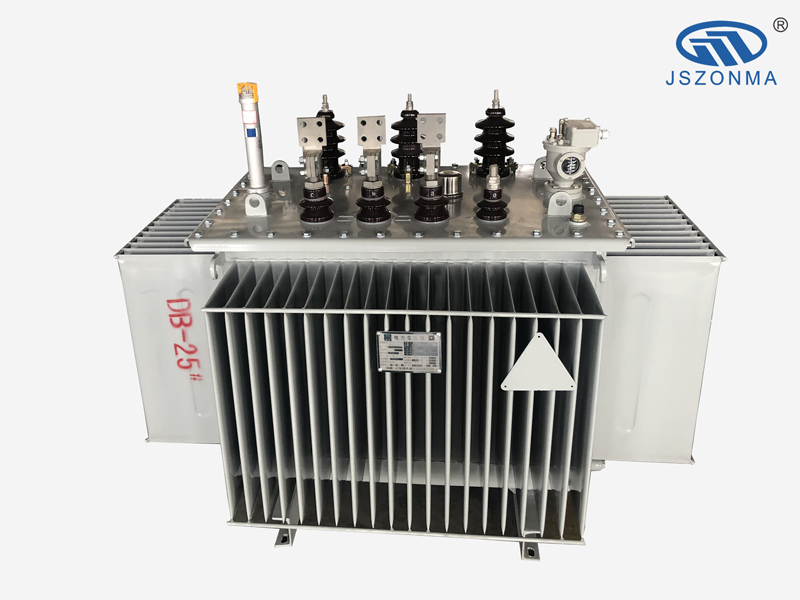
In large-scale power distribution systems, industrial plants, and power stations, the demand for stable, efficient, and flexible power conversion is growing rapidly. The three phase three winding transformer has become a core component in these scenarios, thanks to its ability to transmit power between three different voltage levels simultaneously. Unlike traditional two-winding transformers, it integrates high-voltage, medium-voltage, and low-voltage windings in one core, making it ideal for complex power supply systems in the Middle East, Central Asia, and other global markets.
This blog will comprehensively explain the three phase three winding transformer—from its working principle, core features, and technical parameters to its targeted applications, installation tips, and how to choose a reliable manufacturer. Whether you’re an electrical engineer, project contractor, or procurement manager, this guide will help you make informed decisions for your power projects.
What Is a Three Phase Three Winding Transformer?
A three phase three winding transformer is a type of power transformer with three sets of windings (high-voltage, medium-voltage, and low-voltage) wound on the same three-phase iron core. Each winding is designed for a specific voltage level, allowing the transformer to convert and transmit power between three different voltage grades in one unit—eliminating the need for multiple two-winding transformers and reducing installation space and costs.
Key design features:
- Three independent windings: High-voltage (HV), Medium-voltage (MV), and Low-voltage (LV), each with its own rated voltage and capacity.
- Shared iron core: All windings are wound on the same three-phase core, ensuring efficient magnetic coupling and minimal energy loss.
- Dual-directional power flow: Can transmit power between any two windings, providing flexible power distribution for complex systems.
It is widely used in power grids, large industrial plants, and renewable energy projects (such as PV and wind power stations) where power needs to be converted between multiple voltage levels.
Working Principle of Three Phase Three Winding Transformer
The working principle of a three phase three winding transformer is based on electromagnetic induction, similar to two-winding transformers, but with an additional winding for multi-voltage conversion:
- When alternating current is applied to the primary winding (usually the high-voltage winding), it generates an alternating magnetic flux in the iron core.
- This magnetic flux passes through the medium-voltage and low-voltage windings, inducing electromotive force (EMF) in each winding according to the turns ratio of the windings.
- The voltage level of each winding is proportional to its number of turns: HV winding has the most turns, followed by MV, then LV.
- Power can be input from any winding and output from the other two, enabling flexible power distribution and conversion.
A key advantage is that it can supply power to multiple loads with different voltage requirements simultaneously, reducing the complexity of power distribution systems.
Core Features & Technical Data (Backed by Charts)
The three phase three winding transformer stands out for its flexibility, efficiency, and reliability. Below are its core features and a comparative data chart with traditional two-winding transformers, helping you understand its advantages intuitively.
Core Features
- Multi-Voltage Conversion: Transmits power between three voltage levels (e.g., 35kV/10kV/0.4kV) in one unit, saving space and equipment costs.
- High Efficiency: Adopts high-quality cold-rolled silicon steel core and oxygen-free copper windings, reducing no-load loss and load loss by 15–20% compared to ordinary transformers.
- Strong Stability: The shared iron core design ensures uniform magnetic flux distribution, improving short-circuit resistance and operational stability.
- Flexible Application: Suitable for power grids, industrial plants, and renewable energy projects, with customizable voltage and capacity.
- Space-Saving: Replaces multiple two-winding transformers, reducing installation space by 30–40%.
Technical Data Comparison: Three Phase Three Winding vs. Two-Winding Transformer
| Performance Indicator | Three Phase Three Winding Transformer | Three Phase Two-Winding Transformer | Advantage (Three Winding) |
|---|---|---|---|
| Voltage Levels | 3 (HV/MV/LV) | 2 (HV/LV) | Supports multi-voltage conversion |
| No-Load Loss (1000kVA, 10kV) | 1.2kW | 1.5kW | 20% reduction |
| Installation Space | Compact (1 unit) | Large (2+ units) | 30–40% space saving |
| Short-Circuit Resistance | Class F | Class E | 1 grade improvement |
| Application Flexibility | High (multi-scenario) | Medium (single conversion) | Adapt to complex systems |
Common Technical Parameters
| Parameter | Common Range |
|---|---|
| Rated Voltage (HV/MV/LV) | 35kV/10kV/0.4kV, 110kV/35kV/10kV |
| Rated Capacity | 100kVA–5000kVA |
| Frequency | 50Hz/60Hz |
| Cooling Method | Oil-immersed (ONAN/ONAF), Dry-type (SCB series) |
| Insulation Class | Class A/B/F |
| Service Life | 25–30 years |
Targeted Applications (Focus on Middle East & Central Asia)
The three phase three winding transformer is widely used in scenarios that require multi-voltage power supply, especially in large-scale projects in the Middle East and Central Asia. Below are the most common application scenarios:
1. Power Grid Construction & Upgrade
In power grid projects (e.g., urban and rural grid upgrades in Saudi Arabia, UAE, Kazakhstan), the three phase three winding transformer is used to convert high-voltage power (35kV/110kV) to medium-voltage (10kV) for urban distribution and low-voltage (0.4kV) for residential/commercial use. It simplifies the grid structure and improves power transmission efficiency.
2. Large Industrial Plants
Industrial facilities such as oil refineries, mining sites, and manufacturing plants (common in the Middle East oil fields and Central Asia mining areas) require multiple voltage levels for different equipment (e.g., 35kV for heavy machinery, 10kV for production lines, 0.4kV for lighting). The three phase three winding transformer provides a one-stop power supply solution, reducing equipment investment and maintenance costs.
3. Renewable Energy Projects
In large-scale PV and wind power stations (growing rapidly in the Middle East and Central Asia), the three phase three winding transformer converts the low-voltage power generated by PV panels/wind turbines to medium-voltage for on-site distribution and high-voltage for grid connection. It improves the efficiency of renewable energy utilization.
4. Power Stations & Substations
Power stations and substations use three phase three winding transformers to distribute power to different regions and load types. For example, in a substation in the UAE, it converts 110kV high-voltage power to 35kV for industrial use and 10kV for urban distribution, ensuring stable power supply for various scenarios.
Installation & Maintenance Tips (Adapt to Harsh Environments)
Proper installation and regular maintenance are essential to maximize the service life and performance of the three phase three winding transformer, especially in harsh environments (high temperature, dust, extreme cold) in the Middle East and Central Asia.
Installation Guidelines
- Site Selection: Choose a dry, well-ventilated location away from sandstorms (Middle East) and extreme cold (Central Asia). Install a dust shield or insulation cover if necessary.
- Foundation Preparation: Use reinforced concrete foundation with a thickness of ≥20cm, designed to withstand the transformer’s weight and seismic activity (up to 8 degrees).
- Winding Connection: Ensure correct connection of HV, MV, and LV windings to avoid short circuits. Use professional tools to tighten terminals and prevent loose connections.
- Grounding System: Install a dedicated grounding electrode with a resistance of ≤4Ω to protect against lightning strikes (common in the Middle East) and fault currents.
Maintenance Schedule
| Maintenance Frequency | Key Tasks | Regional Considerations |
|---|---|---|
| Monthly | Check oil level (oil-immersed), inspect for leaks, clean surface dust | Remove sand and dust regularly (Middle East) |
| Quarterly | Test oil quality (dielectric strength), check winding temperature | Monitor oil viscosity in high temperatures (Middle East) |
| Annual | Measure no-load loss, check insulation resistance, tighten fasteners | Conduct insulation tests before cold winters (Central Asia) |
| 5-Yearly | Replace transformer oil, inspect core and windings | Full maintenance before project expansion |
How to Choose a Reliable Three Phase Three Winding Transformer Manufacturer?
For global projects, choosing a professional manufacturer is crucial to ensure product quality and after-sales support. Here are the key criteria to consider:
- International Certifications: Ensure the manufacturer’s products meet IEC 60076, ISO 9001, CE, SASO (Middle East), and GOST (Central Asia) standards.
- Customization Capability: The manufacturer should offer customized voltage, capacity, and cooling methods (oil-immersed/dry-type) to adapt to your project’s needs.
- Production & Testing Capacity: Check if the manufacturer has advanced production lines and rigorous testing equipment to ensure product performance.
- Global After-Sales Service: Provide multilingual support (English, Arabic, Russian) and on-site installation guidance, maintenance training, and spare parts supply.
- Project Experience: Choose a manufacturer with experience in Middle East and Central Asia projects, familiar with local environmental and grid requirements.
Why We Are Your Trusted Manufacturer?
As a professional international transformer manufacturer, we specialize in producing high-quality three phase three winding transformers tailored to the Middle East and Central Asia markets. Our advantages include:
- Products comply with IEC, ISO, CE, SASO, and GOST standards, ensuring smooth customs clearance and grid access.
- Full customization: Voltage (35kV/10kV/0.4kV, etc.), capacity (100kVA–5000kVA), and cooling methods (oil-immersed/dry-type) can be customized.
- Advanced production base: 10,000㎡ factory with automatic winding machines and 8 comprehensive testing procedures for each transformer.
- Global support: Multilingual service (English, Arabic, Russian), 20-day delivery for standard models, 35-day delivery for custom models, and on-site after-sales support.
- Proven project experience: Successfully supplied transformers for power grid, industrial, and renewable energy projects in Saudi Arabia, UAE, Kazakhstan, and Uzbekistan.
Final Thoughts
The three phase three winding transformer is a flexible, efficient, and reliable solution for complex power distribution systems. It plays a crucial role in power grids, industrial plants, and renewable energy projects in the Middle East, Central Asia, and beyond. By understanding its features, applications, and maintenance requirements, you can choose the right product for your project and ensure long-term stable operation.
If you need a custom three phase three winding transformer or have questions about technical parameters, installation, or pricing, contact our team today. We will provide you with a professional solution and competitive quote to power your project success.