 +86 15852255369
 sales@unitatransformer.com
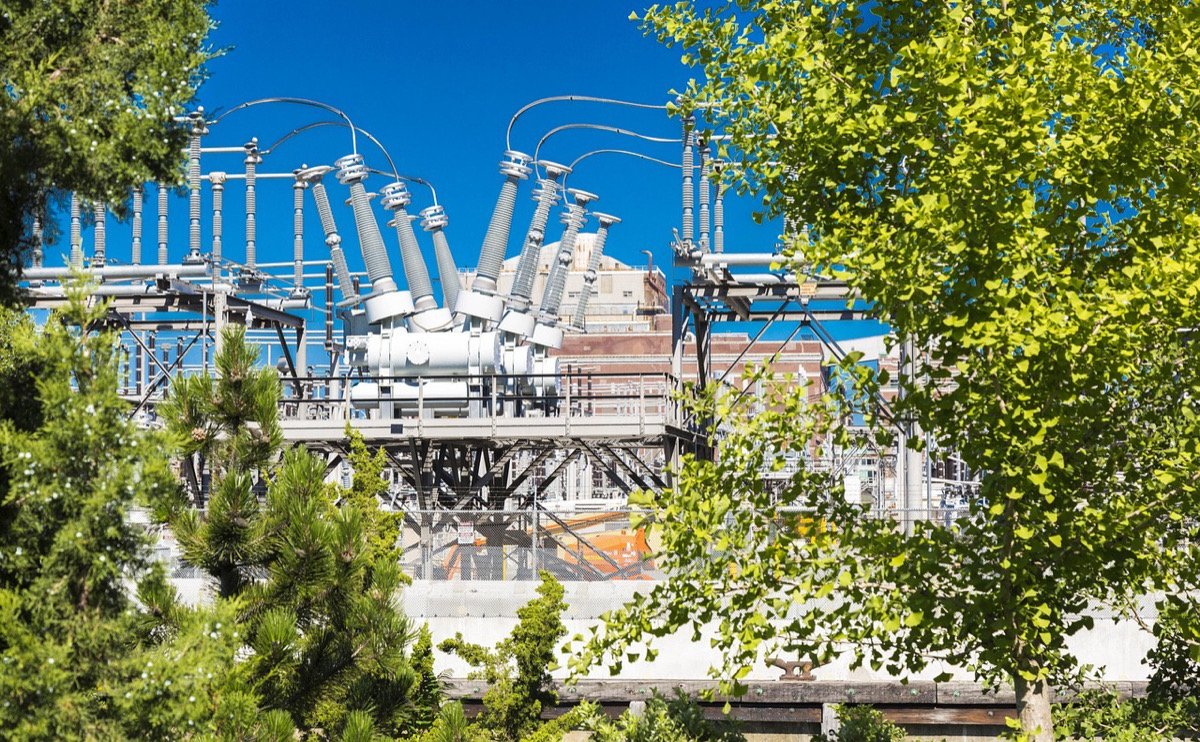
Why Oil-Immersed Transformers Remain Irreplaceable in Power Transmission?
In the era of rapid energy transition—where renewable sources like wind and solar demand stable grid integration, and urbanization drives soaring electricity consumption—oil-immersed transformers (OITs) stand as the backbone of power infrastructure.
Accounting for over 75% of the global transformer market (per Grand View Research 2024), these devices are not just electrical equipment but critical enablers of modern life. Their enduring dominance stems from a unique blend of efficiency, durability, and adaptability that dry-type alternatives struggle to match.
From 11kV distribution lines in rural villages to 1000kV ultra-high voltage (UHV) transmission networks connecting nations, OITs deliver consistent performance, often operating reliably for 40+ years with minimal maintenance.
1. Core Advantages: The Science Behind Their Superiority
Unrivaled Insulation: Protecting Against Electrical Breakdown
At the heart of every OIT lies high-grade insulating oil—typically naphthenic or paraffinic-based—which serves as both an electrical insulator and heat conductor.
Naphthenic oil, favored for its low pour point and excellent dielectric properties, boasts a breakdown voltage exceeding 45kV (per IEC 60296 standards), creating a robust barrier between high-voltage windings.
Unlike dry-type transformers, which rely on solid insulation (e.g., epoxy resin) that degrades over time due to thermal cycling, insulating oil maintains its integrity even in harsh conditions. For example, in the humid coastal regions of Southeast Asia, OITs with hermetically sealed tanks have demonstrated a 3x longer insulation lifespan compared to dry-type units.
Additionally, oil’s ability to seep into microscopic gaps between silicon steel laminations prevents partial discharge—a major cause of transformer failure. This reduces unplanned outages by up to 60% (data from IEEE Power & Energy Society).
[Suggested Image: “Cross-section of OIT showing insulating oil between windings” – ALT: “Oil-immersed transformer insulation structure with naphthenic oil”]
Efficient Cooling: Managing Heat for Sustained Performance
Heat is the enemy of transformer efficiency, and OITs excel at thermal management. Their cooling systems are tailored to load requirements:
- Natural Convection: For small to medium-sized OITs (≤15MVA), oil circulates passively as it heats up, rises to the top of the tank, and dissipates heat through radiator fins. This design requires no moving parts, minimizing maintenance.
- Forced Oil Circulation with Air Cooling (OFAF): Used for 20-100MVA transformers (e.g., industrial substations), electric pumps circulate oil through radiators, while fans accelerate heat loss. This setup allows 1.3x overload for up to 6 hours.
- Forced Oil Circulation with Water Cooling (OFWF): Deployed in high-load scenarios like China’s Zhangbei UHV Wind Power Project, water-cooled heat exchangers keep oil temperatures below 75℃ at full load.
A case study from a German automotive plant illustrates this advantage: an OFAF-cooled 50MVA OIT operated continuously at 90% load for 12 years, with top-oil temperatures never exceeding 80℃—well below the 105℃ maximum standard.
[Suggested Video: “How OIT Cooling Systems Work: Natural vs. Forced Circulation” – 60-second animation showing oil flow in different cooling setups]
Low Lifecycle Costs: Saving Money Over Decades
While OITs may have a higher upfront cost than dry-type transformers, their lifecycle costs are significantly lower. Here’s why:
- Minimal Maintenance: Sealed tanks prevent dust and moisture ingress, eliminating frequent cleaning. Routine care only requires annual oil sampling (for moisture, acidity, and dissolved gases) and filter replacements every 5 years.
- Long Service Life: With proper care, OITs often outlast their 30-year design life. A 2023 CIGRE survey found 40% of 1980s-era OITs are still operational.
- Easy Repairs: Unlike dry-type units (where damaged windings need full replacement), OITs can be repaired on-site by replacing oil or rewinding coils—cutting downtime from months to weeks.
For a Texas municipal utility, switching to OITs for their 22kV network reduced maintenance costs by 40% over 10 years, offsetting the initial price difference in 5 years.
Extreme Environment Adaptability: Performing Where Others Fail
OITs are engineered to thrive in challenging conditions:
- Cold Climates: Siberia and Canada use OITs with -45℃ pour-point oil and expandable bellows tanks to prevent freezing and rupture.
- Hot & Humid Areas: Tropical OITs feature epoxy-polyester corrosion coatings and silica gel breathers to absorb moisture.
- Coastal & Offshore: Offshore wind farms use stainless steel tanks with anti-fouling coatings to resist saltwater damage.
Norway’s Snøhvit LNG plant, above the Arctic Circle, relies on -40℃ OITs that have operated flawlessly since 2007—even during polar nights.
[Suggested Image: “OIT installed at Snøhvit Arctic LNG Plant” – ALT: “Low-temperature oil-immersed transformer in Arctic environment”]
2. Working Principle: How Electromagnetism Meets Fluid Dynamics
OITs operate on Faraday’s Law of Electromagnetic Induction, but their design integrates fluid dynamics for optimal performance. Here’s a step-by-step breakdown:
- Power Input: Alternating current (AC) from the grid flows into the primary copper winding, creating a magnetic field.
- Magnetic Flux: The field passes through a core of thin (0.35-0.5mm) insulated silicon steel laminations, which amplifies flux while minimizing eddy current heat loss.
- Voltage Transformation: The flux induces voltage in the secondary winding—its turn count determines output (e.g., stepping 110kV down to 22kV for distribution).
- Insulation & Cooling: Insulating oil surrounds windings and core, preventing arcing and transferring heat to the tank or radiators.
- Heat Dissipation: Hot oil rises (or is pumped) to radiators, releases heat, and flows back to the core—completing the cycle.
This synergy allows large OITs to achieve over 99.7% efficiency, wasting minimal energy as heat.
[Suggested Image: “OIT Working Principle Diagram” – ALT: “Oil-immersed transformer electromagnetic induction and cooling cycle diagram”]
3. Key Applications: Powering Every Aspect of Modern Life
OITs are ubiquitous across industries, with specialized designs for each use case:
- Utility Grids: UHV networks like India’s Green Energy Corridor use 1000MVA OITs to transmit power over 1000+ km with minimal losses.
- Industrial Manufacturing: Steel mills and data centers rely on OITs with 120kA short-circuit withstand capability. Taiwan Semiconductor’s 3nm fab uses 200MVA OITs for precision equipment.
- Renewable Energy: Wind/solar farms use OITs in boost stations to step up voltage from 0.69kV (turbines/panels) to 110kV+. China’s Gansu Wind Farm (8.5GW) has over 500 OITs.
- Transportation: Tokyo Metro’s Yamanote Line uses low-noise OITs (<60dB) to meet urban noise rules.
- Marine & Offshore: Royal Caribbean’s Wonder of the Seas uses 15 shock-resistant OITs to power its 225,282-ton capacity.
[Suggested Image: “OIT Applications Infographic” – ALT: “Oil-immersed transformer use cases: utility grids, renewables, transportation”]
4. Maintenance & Reliability: Ensuring Long-Term Performance
Proactive maintenance is critical to maximizing OIT lifespan. Key practices include:
- Oil Quality Monitoring: Regular Dissolved Gas Analysis (DGA) detects early issues (e.g., high methane = overheating). Tools like GE’s DGA-2000 provide real-time data.
- Temperature Management: Sensors trigger alarms at 85℃ and auto-reduce load if temperatures exceed 90℃ for 2 hours.
- Seal Inspection: Annual gasket/bushing checks prevent oil leaks that cause environmental damage.
- Load Management: Smart grids use AI to avoid prolonged >1.2x overloads, reducing insulation degradation.
The UK’s National Grid implemented predictive maintenance for its OIT fleet, cutting unplanned outages by 35% and extending average life by 10 years.
[Suggested Video: “OIT Maintenance Best Practices” – Interview with utility technician demonstrating oil sampling and DGA testing]
Conclusion: The Future of Oil-Immersed Transformers
As the world shifts to a low-carbon economy, OITs are evolving to meet new challenges. Innovations like vegetable-based biodegradable oil (95% degradation rate) address environmental concerns, while IoT integration enables remote monitoring.
In emerging markets, OITs will be pivotal for rural electrification—their ability to operate in remote, harsh environments makes them ideal for expanding power access.
Far from being replaced, oil-immersed transformers are adapting and thriving. Their efficiency, durability, and adaptability ensure they remain the cornerstone of global power infrastructure for decades. Choosing an OIT is an investment in reliable, sustainable power.