 +86 15852255369
 sales@unitatransformer.com
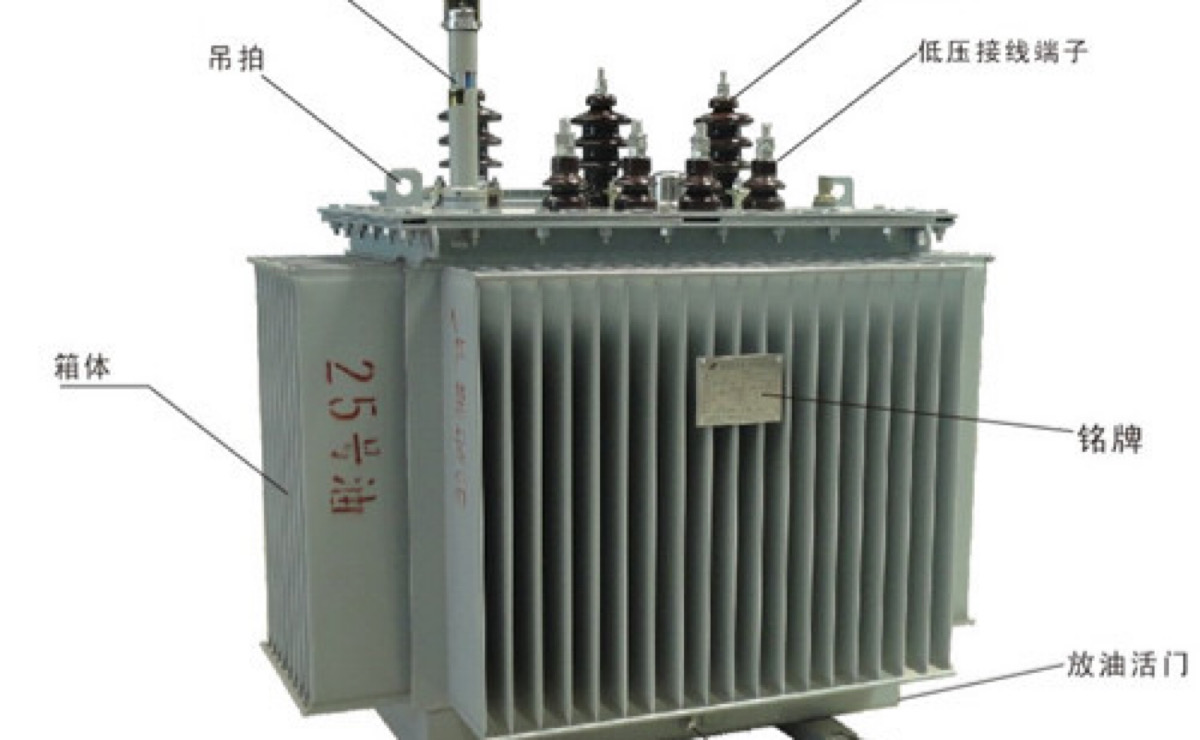
I. What is an Oil-Immersed Transformer?
An oil-immersed transformer, as the name suggests, is a type of power transformer where the main components (the core and windings) are immersed in a specialized insulating oil. This design cleverly combines various physical and chemical principles to achieve efficient, safe, and long-lasting voltage conversion and power transmission.
II. Core Structure and Working Principle
1. Core Structure:
A typical oil-immersed transformer consists mainly of the following parts:
- Core: Typically made of laminated high-permeability silicon steel sheets, it forms the main magnetic circuit of the transformer, efficiently conducting the magnetic field.
- Windings: Made of insulated copper or aluminum wire, divided into high-voltage and low-voltage windings. They form the electrical circuit of the transformer, responsible for input and output of electrical energy.
- Insulating Oil: Usually mineral oil, also known as transformer oil. It plays multiple roles:
- Insulation: The dielectric strength of oil is much higher than air, effectively preventing breakdown between windings, and between windings and the core/tank.
- Heat Dissipation (Cooling): Transformers generate significant heat during operation. The oil circulates via convection, carrying heat away from the core and windings and dissipating it through the tank walls or radiators. Larger transformers are equipped with oil pumps and fans for forced oil and forced air cooling (OFAF) to improve efficiency.
- Tank: A sealed container, usually welded from steel plates, that houses all internal components and the insulating oil. It is often fitted with radiators or cooling tubes.
- Conservator (Expansion Tank): An expansion vessel located above the main tank, connected via a pipe. It accommodates the expansion and contraction of the oil due to temperature changes, keeping the main tank full and reducing the oil-air contact area.
- Breather: Connected to the conservator, it contains a desiccant (like silica gel) to filter moisture from the air drawn into the tank, keeping the oil dry.
- Safety Devices:
- Buchholz Relay: Installed in the pipe between the main tank and the conservator. It triggers an alarm or cuts power in case of internal minor faults (gas generation) or serious faults (surge of oil).
- Pressure Relief Device: Rapidly releases pressure if an internal fault causes a sudden increase, preventing the tank from rupturing.
- Bushings: Allow the high and low voltage winding leads to safely exit the tank cover and connect to external lines, while providing insulation against the grounded tank.
2. Working Principle:
Oil-immersed transformers operate based on electromagnetic induction. When alternating current flows through the primary winding, it creates an alternating magnetic field in the core. This alternating magnetic field then induces an electromotive force (EMF) in the secondary winding. By altering the turns ratio between the primary and secondary windings, the voltage can be stepped up or down, adhering to the law of energy conservation.
III. Main Advantages and Disadvantages
Advantages:
- Excellent Insulation: Insulating oil provides very high dielectric strength, allowing transformers to be designed more compactly and for very high voltage levels (up to 1000kV and above).
- High Cooling Efficiency: Oil has a high heat capacity and effective convective circulation, efficiently managing the operating temperature of large transformers, ensuring long-term stable operation.
- Mature and Reliable Technology: With over a century of development, the design, manufacturing, operation, and maintenance experience is extensive, and reliability is well-proven.
- High Cost-Effectiveness: Compared to dry-type transformers of equivalent capacity, oil-immersed transformers have lower manufacturing costs, offering absolute advantages, especially in high-voltage and high-capacity applications.
- Condition Monitoring Capability: Internal incipient faults can be effectively diagnosed through analysis of the insulating oil, such as Dissolved Gas Analysis (DGA), dielectric strength testing, etc., enabling predictive maintenance.
Disadvantages:
- Fire Risk: Although modern transformer oil is a less-flammable liquid, it can still ignite or even explode under extreme fault conditions. Therefore, higher fire protection requirements are necessary.
- Requires Regular Maintenance: Regular checks of oil level, temperature, and oil quality testing and treatment are needed. Oil filtering or replenishment may be required.
- Large Weight and Size: Due to the oil and heavy tank, they are generally heavier and larger than equivalent dry-type transformers.
- Environmental Concerns: The insulating oil itself is a petroleum derivative; leaks can contaminate soil and water sources. Disposal of waste oil from decommissioned transformers must comply with environmental regulations.
IV. Main Applications
Oil-immersed transformers are the absolute workhorses of the power system, used in:
- Power Plants: As step-up transformers, elevating the voltage generated for efficient long-distance transmission, reducing losses.
- Transmission Networks: As key power transformers in substations, transferring power between different voltage levels.
- Distribution Networks: As distribution transformers, stepping down voltage to levels usable by industries, businesses, and households (e.g., 10kV/400V).
- Industrial and Mining Facilities: Providing specific voltage levels required by large factories, mines, etc.
V. Operation and Maintenance
To ensure the longevity and reliability of oil-immersed transformers, systematic maintenance is essential:
- Routine Inspections: Check oil level, oil temperature, load current, listen for abnormal sounds, check for oil leaks.
- Regular Preventive Testing: Includes insulation resistance tests, winding resistance tests, transformer oil testing (especially Dissolved Gas Analysis – DGA, a key method for diagnosing internal faults).
- Condition-Based Maintenance: Schedule major overhaul works such as internal inspection (core lifting), oil filtering, and seal replacement based on test results and equipment condition.
Conclusion
Although newer types like dry-type transformers and SF6 gas-insulated transformers are developing in specific areas (e.g., indoors, subways, chemical plants), oil-immersed transformers, by virtue of their irreplaceable technical and economic advantages, will continue to dominate the high-voltage, high-capacity sectors of the power system for the foreseeable future. Like a seasoned, silent, and reliable guardian, it continues to provide an unwavering power supply for the world’s illumination and progress.