 +86 18751738721
 sales@unitatransformer.com
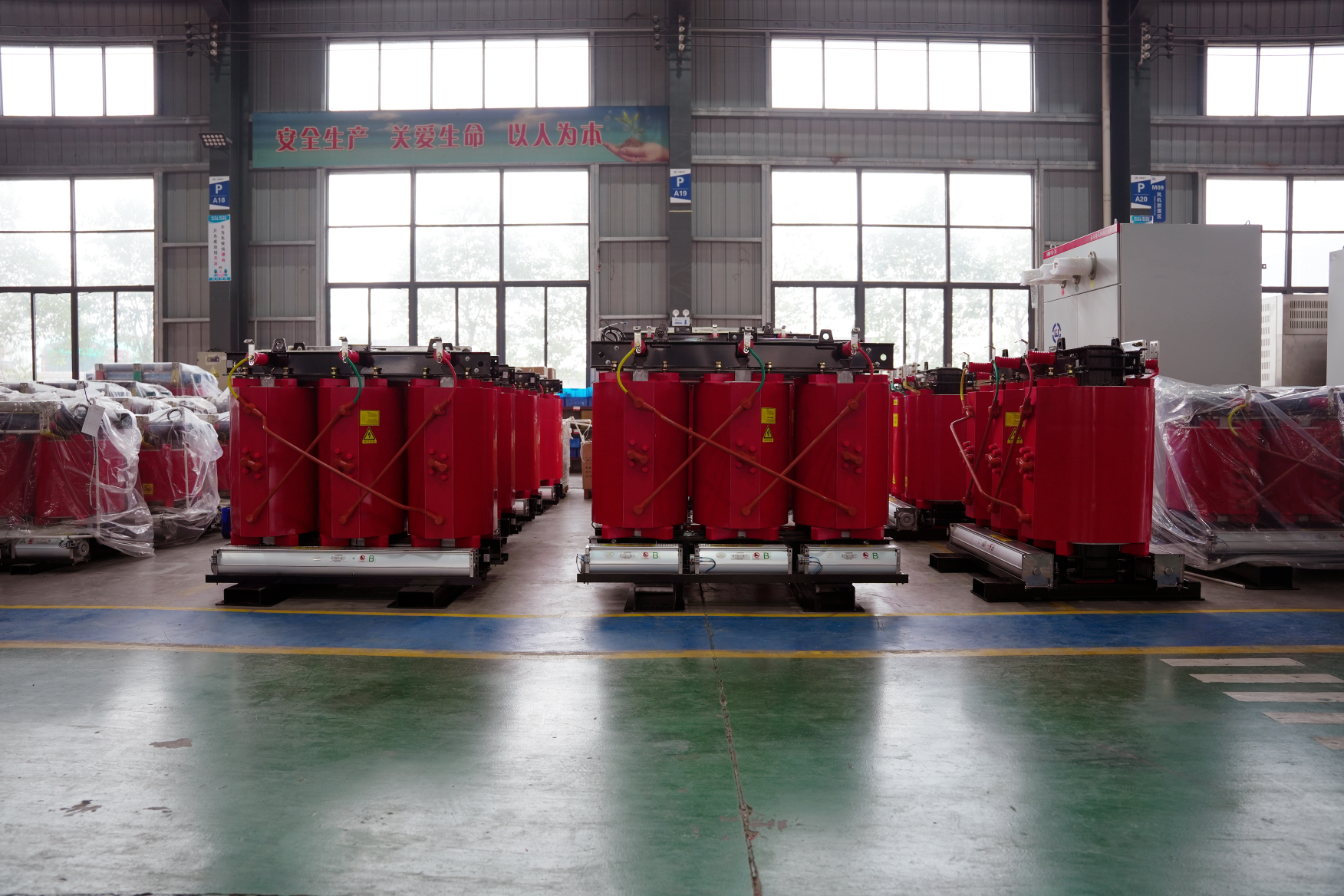
Most Southeast Asian factories have been put into operation for many years, and a large number of old transformers, distribution cabinets and power cables are still running on site. Many enterprises adhere to the idea of “can use without replacement”, ignoring the performance attenuation and safety hidden dangers of aging equipment. In the tropical high humidity and high temperature environment, aging electrical equipment decays faster than in ordinary regions, and the probability of short circuit, electric leakage and fire will increase exponentially.
It is very important to master scientific judgment standards, neither blindly replacing equipment to waste cost nor delaying replacement to bury safety hidden dangers.
| Aging Judgment Dimension | Typical Aging Manifestation | Risk Degree | Suggested Disposal Plan |
|---|---|---|---|
| Insulation Performance | Insulation value continues to decline, damp easily in rainy season | High | Arrange professional testing, replace directly if failing the standard |
| External Appearance & Structure | Shell rust obvious, coating peeling, wiring terminal oxidation blackening | Medium | Local anti-corrosion maintenance first, overall replacement if corrosion spreads |
| Operation State | Frequent tripping, unstable voltage, abnormal overheating during peak load | High | Stop using in time, select matching new equipment for replacement |
| Energy Consumption Performance | No load loss increases obviously, monthly power consumption rising for no reason | Medium | Evaluate operation cost, replace with energy-saving model to save long-term electricity fee |
| Maintenance Frequency | Minor faults occur frequently, needing repair every one or two months | Medium | Comprehensive overhaul assessment, eliminate repeated maintenance old equipment |
For old equipment that has been in operation for more than 15 years in coastal and high humidity areas, it is recommended to give priority to elimination and renewal. Adopting new CE standard equipment can not only improve safety stability but also adapt to local harsh climate and reduce later maintenance investment.