 +86 18751738721
 sales@unitatransformer.com
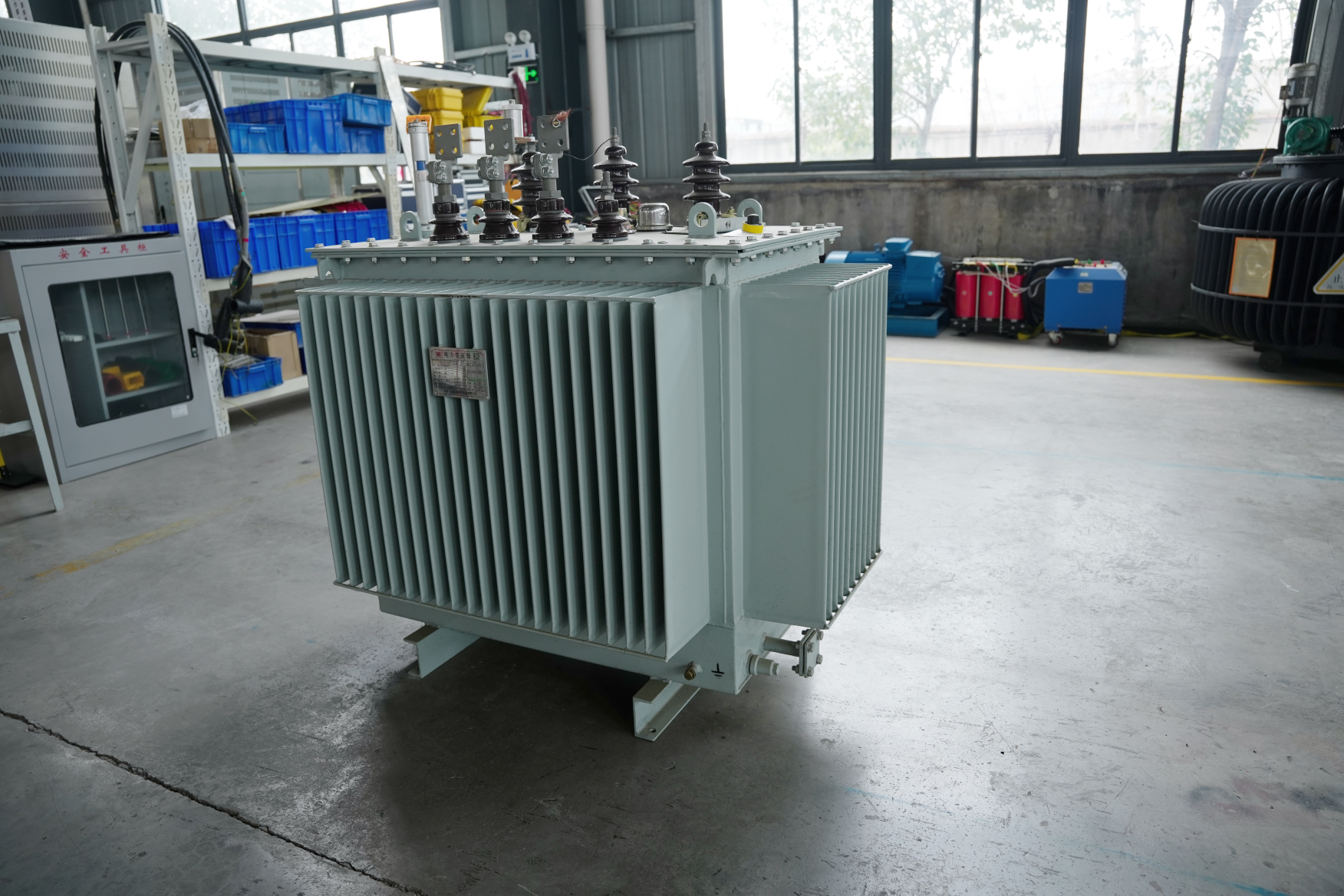
Improper matching between transformer capacity and power cable specification is a common mistake in Southeast Asian factory renovation and new project construction. Many buyers only focus on transformer power rating while choosing cheaper undersized cables, resulting in continuous overheating, heavy power loss and accelerated cable insulation aging. In serious cases, it may trigger electric leakage and fire hazards under long-term high-load operation.
Reasonable size matching ensures stable current transmission, reduces heat accumulation and makes the whole power distribution system run safely for many years.
| Capacity Range | Suitable Cable Standard | Main Risk of Mismatch | Matching Principle |
|---|---|---|---|
| Small capacity distribution | Common low-voltage copper cable | Cable overheating, voltage drop obvious under peak load | Prioritize copper core cable for long-term stable operation |
| Medium industrial capacity | Armored anti-corrosion cable | Insulation melting and aging in high temperature environment | Leave enough current margin for seasonal peak power consumption |
| Large project capacity | Heavy-duty insulated power cable | Severe line loss and easy overload tripping | Match strictly according to rated current rather than subjective experience |
| Coastal area layout | Salt fog resistant armored cable | Fast outer sheath corrosion and shortened service life | Prioritize corrosion resistant type to adapt coastal climate |
Correct matching does not require complex professional calculation. Follow conventional industry standards and reserve proper margin for high-temperature and rainy seasons, so both transformer and power cable can maintain long-term stable performance without unnecessary waste of investment.