 +86 18751738721
 sales@unitatransformer.com
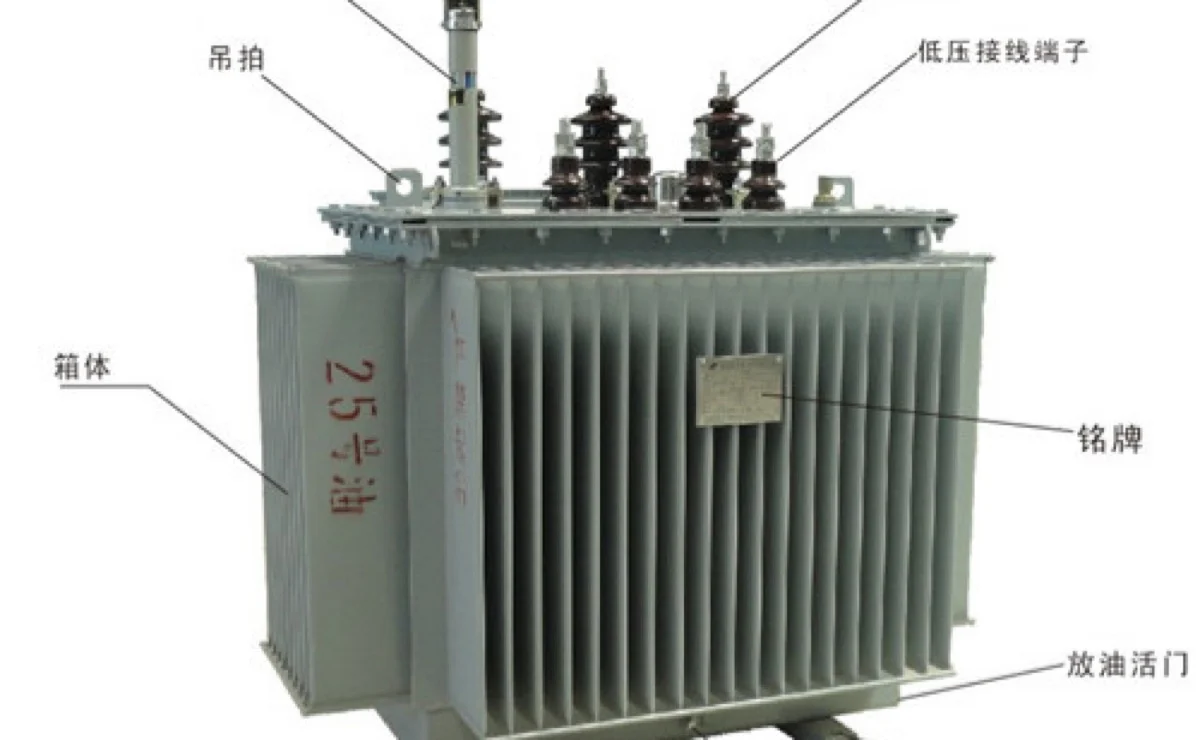
Oil-immersed transformers have been serving as core equipment in power transmission and distribution systems for over a century. Utilizing insulating oil as both insulation and cooling medium, these transformers handle more than 70% of global power distribution tasks. With continuous technological innovation, oil-immersed transformers are evolving toward higher efficiency, better environmental performance, and greater intelligence.
Working Principle and Structural Characteristics
Oil-immersed transformers operate on the principle of electromagnetic induction, primarily consisting of an iron core, windings, insulating oil, tank, cooling system, and protective devices. The iron core is made of high-permeability silicon steel laminations, while windings are formed using copper or aluminum conductors. Insulating oil serves as both the main insulation medium and coolant, carrying away heat generated during operation to ensure safe operating temperatures.
Compared to dry-type transformers, oil-immersed transformers offer higher dielectric strength and better heat dissipation capabilities. The breakdown voltage of insulating oil reaches 50-60kV/2.5mm, significantly higher than air’s 3kV/2.5mm. This allows for more compact designs while maintaining lower operating temperatures at equivalent capacity.
Technical Advantages and Performance Characteristics
Oil-immersed transformers demonstrate outstanding advantages in multiple aspects. Their load capacity significantly exceeds that of dry-type transformers, with short-term overload capability reaching 150%-200%. Insulating oil has more than ten times the heat capacity of air, enabling transformers to withstand greater thermal shocks. Additionally, the oil-immersed design provides better protection against moisture, dust, and corrosion, extending equipment service life.
In terms of energy efficiency, modern oil-immersed transformers have achieved remarkable performance levels. Transformers meeting IEC 60076 S13 and S14 efficiency classes show no-load and load losses reduced by over 30% and 20% respectively compared to conventional units. Some models employing amorphous metal cores can reduce no-load losses by 60-70%.
Development of Environmentally Friendly Insulating Oils
In recent years, the application of environmentally friendly insulating oils has become a significant industry trend. Vegetable oil transformers utilize renewable natural ester insulating oils that offer excellent biodegradability, high flash points, and sustainable sourcing. Experimental data shows that natural ester insulating oils have fire points exceeding 300°C, significantly higher than mineral oil’s 160°C, greatly enhancing transformer fire safety.
Life cycle assessment studies indicate that a single 500kV vegetable oil transformer can reduce carbon dioxide emissions by 72.8 tons throughout its service life compared to conventional units. Additionally, natural ester insulating oils demonstrate better moisture tolerance and oxidation stability, contributing to extended transformer lifespan.
Intelligent Monitoring and Digital Management
Modern oil-immersed transformers are increasingly incorporating intelligent monitoring systems. Online dissolved gas analysis devices continuously monitor fault characteristic gases such as hydrogen, carbon monoxide, and methane, providing early warning of potential problems. Fiber optic temperature measurement systems directly monitor winding hot-spot temperatures, delivering accurate data for load management.
Digital transformers integrate various sensors and communication modules to enable remote monitoring and predictive maintenance. These systems collect operational data, analyze equipment condition through artificial intelligence algorithms, optimize operating parameters, and provide maintenance recommendations, thereby maximizing equipment lifespan and operational reliability.
Application Fields and Selection Guidelines
Oil-immersed transformers find extensive applications across various sectors. In power grid systems, they perform critical transmission and distribution functions; in industrial settings, they provide power for production equipment; in commercial buildings, they ensure reliable electricity supply; in renewable energy sectors, they support grid integration of wind farms and solar power plants.
Multiple factors must be considered during selection: capacity should meet load requirements with appropriate margin; voltage must match the grid; impedance voltage should satisfy system short-circuit capacity requirements; cooling methods must suit installation environments; and protection ratings need to accommodate installation conditions. Additionally, modern requirements such as efficiency class, environmental considerations, and intelligence levels should be evaluated.
Maintenance and Fault Prevention
Proper maintenance is crucial for ensuring long-term reliable operation of oil-immersed transformers. Regular inspection of insulating oil quality—including dielectric strength, moisture content, acidity, and dissolved gas analysis—helps identify potential issues early. Preventive maintenance also includes checking connection tightness, cooling system operation, and seal integrity.
Common failures include insulation aging, winding deformation, core ground faults, and bushing problems. Through online monitoring systems and regular preventive testing, these failure symptoms can be detected early, preventing equipment damage and power outages.
Future Development Trends
The future development of oil-immersed transformers will focus on several directions: first, continuing to improve energy efficiency through advanced materials and optimized designs; second, enhancing environmental performance by promoting more biodegradable insulating oils; third, increasing intelligence levels with more sensors and advanced analytics; fourth, improving sealing technology toward fully sealed maintenance-free designs; and fifth, adapting to renewable energy integration needs by developing products better suited for fluctuating loads.
With the application of new materials, advanced manufacturing processes, and digital technologies, oil-immersed transformers will continue to evolve, providing crucial support for building safer, more efficient, and smarter power systems.
One thought on “Oil-Immersed Transformer: Innovation – Insulating”
Comments are closed.