Article Keywords (for SEO): Transformer, transformer principle, types of transformers, dry-type transformer, oil-immersed transformer, power transformer, function of transformer, transformer installation, transformer maintenance, transformer manufacturer
Article Description: This article provides an in-depth and easy-to-understand introduction to what a transformer is, its working principle, main types, wide range of applications, as well as key points for selection and maintenance. It is an authoritative guide for a comprehensive understanding of this core power equipment.
(Start of Main Text)
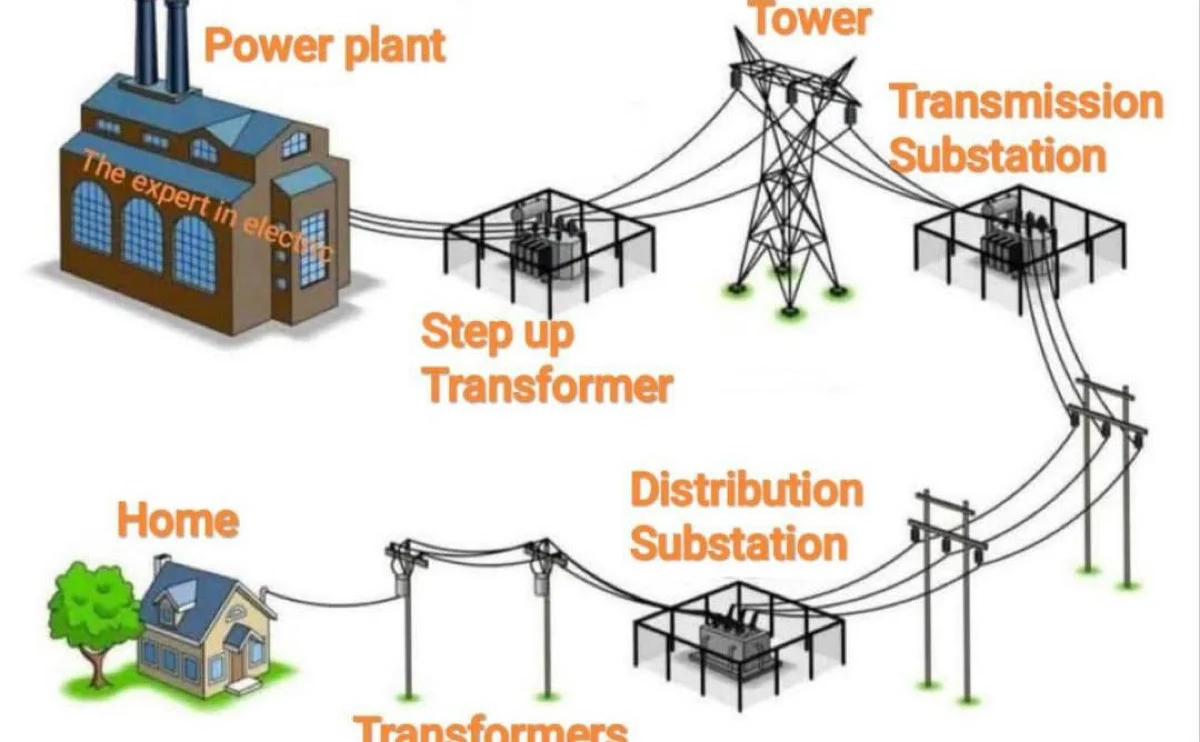
In today’s society, electricity is as indispensable as air and water. However, have you ever wondered how the electrical energy generated at the power plant is transmitted safely and efficiently to millions of households and powers the various appliances in our daily lives? In this process, a seemingly inconspicuous yet vital device plays a central role—it is the transformer.
1. What is a Transformer?
A transformer is a static electrical device that uses the principle of electromagnetic induction to transfer electrical energy from one circuit to another while simultaneously changing the voltage and current levels. It acts like a “pressure regulator” in the power system, ensuring that electrical energy is transmitted, distributed, and used at the most appropriate voltage level.
2. How Does a Transformer Work? The Magic of Electromagnetic Induction
The core working principle of a transformer is based on Faraday’s Law of Electromagnetic Induction. It mainly consists of two windings (coils) and an iron core:
- Primary Winding: The coil connected to the AC power source.
- Secondary Winding: The coil connected to the load (electrical equipment).
- Iron Core: Laminated from silicon steel sheets, it provides a efficient low-reluctance path for the magnetic field.
When alternating current passes through the primary winding, it creates an alternating magnetic field in the iron core. This changing magnetic field cuts through the secondary winding, thereby inducing an electromotive force (voltage) in the secondary winding. The ratio of the output voltage to the input voltage is equal to the ratio of the number of turns in the secondary winding to the number of turns in the primary winding. This is the famous “turns ratio” formula:VsVp=NsNpVpVs=NpNs
Where:
- VsVs and VpVp are the secondary and primary voltages,
- NsNs and NpNp are the number of turns in the secondary and primary windings.
By carefully designing the coil turns ratio, a transformer can easily increase voltage (step-up transformer) or decrease voltage (step-down transformer).
3. Main Types of Transformers
Transformers can be classified into various types based on different criteria to suit various application scenarios.
- Classified by Cooling Method:
- Dry-Type Transformer: The windings are exposed to air and cooled by air convection. Its advantages include fire resistance, explosion-proof, no pollution, and simple maintenance. They are commonly used in indoor locations such as hospitals, schools, and commercial buildings.
- Oil-Immersed Transformer: The windings are immersed in insulating oil, which dissipates heat through oil circulation. Its advantages are better heat dissipation, larger capacity, and lower cost, but they carry risks of oil leakage and fire. They are typically used outdoors in substations and distribution systems.
- Classified by Application:
- Power Transformer: Used in transmission and distribution systems, with high voltage levels and huge capacities, they are the backbone of the power grid.
- Distribution Transformer: Steps down the transmission voltage to levels usable by industries, businesses, and households (e.g., 10kV/400V).
- Special Transformer: Such as rectifier transformers, furnace transformers, instrument transformers, etc., used in specific industrial fields.
- Classified by Phase: Can be single-phase transformers or three-phase transformers.
4. Core Functions and Application Areas of Transformers
- Long-Distance Power Transmission: The electrical energy generated by power plants is stepped up to a much higher voltage (e.g., to 110kV, 220kV, or higher) by step-up transformers, which greatly reduces the current and power loss on the transmission lines, enabling economical and efficient long-distance transmission.
- Power Distribution and Utilization: Near users, step-down transformers reduce the high voltage step-by-step to safe low voltages (e.g., 380V/220V) for factory equipment and household use.
- Industrial Applications: Provide the specific voltages required for machine tools, welding equipment, rail transportation, etc.
- Electronic Devices: Almost all power adapters (chargers) for electronic products contain a small transformer inside to convert mains electricity to the low-voltage DC power required by the device.
5. How to Select and Maintain Transformers?
- Key Selection Points:
- Determine Capacity (kVA): Calculate the required capacity based on the total load, leaving an appropriate margin.
- Choose Type: Select dry-type or oil-immersed based on the installation environment (indoor/outdoor).
- Consider Energy Efficiency: Choose products that meet national energy efficiency standards (e.g., China Energy Label) for energy savings and lower long-term operating costs.
- Brand and Quality: Choose a reputable transformer manufacturer to ensure product quality and after-sales service.
- Maintenance:
- Regular Inspection: Check oil level (for oil-immersed), temperature, and for abnormal sounds.
- Preventive Testing: Regularly perform tests such as insulation resistance testing and winding DC resistance testing to identify potential faults in time.
- Keep Clean: Especially for dry-type transformers, keep the windings and air ducts clean to ensure effective heat dissipation.
Conclusion
The transformer, this silent device standing in substations or hidden in basements, is a cornerstone of modern civilization and industrial society. It silently guards the efficient flow of electricity, lights up our world, and drives the progress of our era. Understanding transformers is understanding how we are connected to the world’s energy network.