 +86 15852255369
 sales@unitatransformer.com

With the rapid popularization of distributed photovoltaics and new energy vehicle charging facilities, traditional split-type substations are gradually unable to meet demands due to large floor space, long installation cycles, and complex maintenance. However, box transformers (also known as prefabricated substations, outdoor power distribution units) have occupied more than 60% of the global distributed power distribution equipment market (source: Global Market Insights 2024) with their core characteristics of “factory prefabrication, integrated integration, and ready-to-use installation”.
From residential area power distribution to industrial park power supply, from rural electrification to new energy project supporting facilities, Box Transformers have become the “bridge” connecting high-voltage grids and end users with their flexibility, reliability, and economy. Compared with traditional substations, their installation cycle is shortened by 70%, floor space is reduced by 50%, and operation and maintenance costs are lowered by 40%, perfectly aligning with the development trend of “distributed, miniaturized, and intelligent” modern power systems.
1. Core Advantages: Five Breakthroughs of Integrated Design
1. Factory Prefabrication for On-Site Rapid Deployment
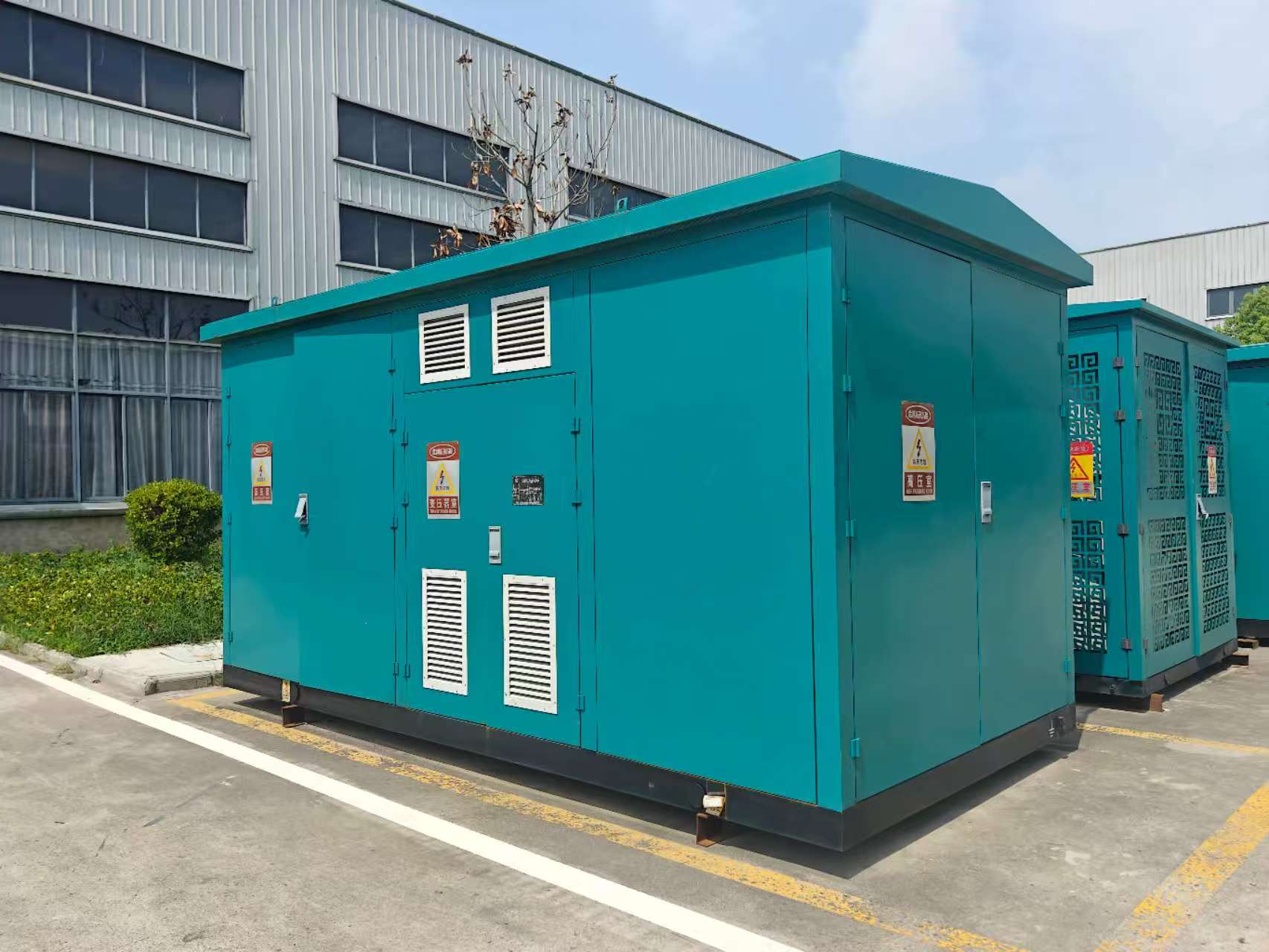
Box Transformers integrate high-voltage switchgear, distribution transformers, low-voltage distribution devices, and reactive power compensation devices into a sealed metal cabinet. All components are pre-installed, debugged, and tested in the factory, and only 1-3 days are needed on-site to complete cable connection and power-on operation.
For example, a new residential community adopted 3 sets of 10kV/0.4kV Box Transformers, and it only took 2 days from equipment delivery to full-capacity power supply, which was significantly shorter than the 60-day construction period of traditional civil substations, meeting the electricity demand of residents in advance.
2. Sealed Protection for Complex Environments
The cabinet is made of cold-rolled steel or stainless steel, with a protection level of IP54-IP65, which can effectively resist harsh environmental impacts such as dust, heavy rain, high temperature, and low temperature. In coastal areas, salt-spray-resistant coated Box Transformers can achieve 10 years of rust-free operation; in desert areas, sand-proof Box Transformers can work normally in extreme temperatures ranging from -30℃ to 50℃.
3. Compact Structure to Save Land Resources
Traditional substations need to build separate high-voltage rooms, transformer rooms, and low-voltage rooms, while Box Transformers integrate multi-room functions into one, with a floor space only 1/3-1/5 of that of traditional substations. Taking a commercial complex in Shanghai as an example, replacing traditional substations with 2 sets of 1250kVA Box Transformers saved about 200㎡ of land, indirectly creating commercial value of over 10 million yuan.
4. Safety and Reliability to Reduce Operation and Maintenance Risks
The cabinet adopts a fully enclosed design, equipped with anti-misoperation interlocking devices, pressure relief valves, and fire-fighting devices, effectively preventing personal electric shock and equipment failure spread. At the same time, the integrated structure reduces exposed wiring points, and the failure rate is 60% lower than that of traditional substations.
5. Flexible Customization for Diverse Needs
The cabinet size, transformer capacity, protection configuration, and compensation scheme can be customized according to scene requirements. For example, new energy projects can customize Box Transformers with SVG dynamic reactive power compensation; data centers can customize special Box Transformers with low noise (≤55dB) and high reliability; remote areas can customize unattended Box Transformers with remote monitoring.
2. Working Principle: How Integrated Architecture Enables Efficient Power Distribution?
The working process of Box Transformers revolves around four core links: “high-voltage input-voltage transformation-low-voltage output-safety protection”, and its integrated architecture realizes efficient energy conversion and precise control:
- High-voltage power distribution link: 10kV/35kV high-voltage power is connected to the high-voltage room of the pad-mounted transformer through cables, and the on-off control and overvoltage protection of the transformer are realized through high-voltage circuit breakers, disconnectors, and arresters;
- Voltage transformation link: The distribution transformer (mostly oil-immersed or dry-type) reduces high-voltage electricity to 0.4kV low-voltage electricity, and the iron core adopts high-permeability silicon steel sheets, with no-load loss as low as 0.5% or less;
- Low-voltage power distribution link: The low-voltage room distributes low-voltage electricity to end users through circuit breakers, leakage protectors, reactive power compensation devices, etc., and compensates reactive power to increase the power factor to above 0.95;
- Intelligent monitoring link: Real-time collection of voltage, current, temperature and other data through sensors, and local protection and remote communication through the controller to ensure stable operation of the equipment.
3. Four Core Application Scenarios: Flexible Adaptation from Cities to Villages
1. Urban and Rural Power Distribution Network Upgrading
In the renovation of old urban residential areas, Box Transformers can directly replace traditional power distribution facilities with insufficient capacity to solve the problem of electricity overload; in rural electrification projects, miniaturized Box Transformers can be flexibly deployed on the edge of villages, avoiding large-scale civil construction and helping the implementation of the “power for every village” project.
Case: A village in Henan adopted 5 sets of 500kVA Box Transformers, completed the 全村 power distribution upgrade in only 1 week, and the power supply reliability increased from 85% to 99.9%, meeting the electricity needs of agricultural machinery irrigation and processing enterprises.
2. New Energy Project Supporting
In distributed photovoltaic and wind power projects, Box Transformers, as the core equipment of “boosting station + power distribution center”, boost the low-voltage electricity of new energy power generation units to 10kV and connect to the grid. Their integrated design is especially suitable for complex installation environments such as mountains and roofs, reducing damage to the ecology.
3. Industrial and Commercial Fields
Industrial parks, commercial complexes, large shopping malls and other scenes have high requirements for power supply reliability. Box Transformers can achieve flexible configuration of “one transformer per factory” and “one transformer per building”, avoiding the impact of single equipment failure on overall power supply. For example, an electronic industrial park in Suzhou adopted 10 sets of 2000kVA Box Transformers, realized N-1 redundancy through parallel operation, and controlled the power supply interruption time within 50ms.
4. Temporary Electricity Scenarios
In temporary electricity demand scenarios such as construction and large-scale events, mobile Box Transformers (with towing devices) can be quickly deployed and flexibly transferred without fixed civil foundations. A large-scale concert in Beijing adopted 2 sets of 1600kVA mobile Box Transformers, completed the power supply construction in 3 hours, and could be evacuated 1 hour after the event.
4. Smart Pad-Mounted Transformer Era: Three Directions of Digital Upgrading
1. Online Monitoring and Predictive Maintenance
Smart Box Transformers integrate online monitoring of dissolved gases in oil (DGA), winding temperature optical fiber sensing, partial discharge detection and other equipment. Data is uploaded to the cloud platform through 4G/5G networks to realize real-time evaluation of equipment health status and predict potential failures 3-6 months in advance.
2. Remote Control and Unattended Operation
Equipped with intelligent terminals and electric operating mechanisms, remote operations such as switching on/off, voltage regulation, and reactive power compensation control can be realized through mobile APP or dispatching platform, reducing the number of on-site operation and maintenance personnel. At present, State Grid has deployed more than 1,000 unattended smart Box Transformers in remote areas, increasing operation and maintenance efficiency by 3 times.
3. Multi-Energy Complementation and Energy Management
Smart Box Transformers are linked with photovoltaics, energy storage, charging piles and other equipment to build an integrated “source-grid-load-storage” microgrid. For example, a community smart pad-mounted transformer in Shanghai integrates 50kW photovoltaics, 100kWh energy storage, and 10 charging piles, realizing self-consumption of clean energy and surplus electricity grid-connected, reducing annual electricity costs by 150,000 yuan.
5. Selection Guide: How to Match Scene Requirements?
- Determine Capacity: Select according to the maximum load and future 5-10 year growth expectation, usually designed according to 70-80% load rate (example: maximum load 800kW, select 1000kVA pad-mounted transformer);
- Select Type: Oil-immersed Box Transformers are suitable for outdoor, large-capacity scenarios (>1000kVA); dry-type Box Transformers are suitable for indoor scenarios with high fire protection requirements (such as data centers);
- Protection Level: Choose IP65 for outdoor open-air, IP54 for indoor or sheltered environment;
- Additional Functions: New energy projects need reactive power compensation, remote areas need remote monitoring, and high load fluctuation scenarios need voltage regulators;
- Compliance: Ensure compliance with GB/T 17467 《High Voltage/Low Voltage Prefabricated Substations》, IEC 62271-202 and other standards.
Conclusion: Box Transformers Lead the Innovation of Power Distribution Mode
From the “fixed civil construction, decentralized deployment” of traditional substations to the “factory prefabrication, integrated integration” of Box Transformers, and then to the “digital linkage, multi-energy complementation” of smart Box Transformers, the development of Box Transformers has always followed the changing needs of power systems. Driven by the “dual carbon” goal, with the integration of new technologies such as hydrogen cooling and all-solid-state transformers, Box Transformers will further upgrade to a “more efficient, smarter, and more environmentally friendly” direction.
Choosing a suitable pad-mounted transformer is not only a decision for equipment procurement, but also a key step in building a flexible, reliable, and sustainable power system. For customized solutions, you can consult our technical team to get exclusive selection suggestions.