 +86 15852255369
 sales@unitatransformer.com
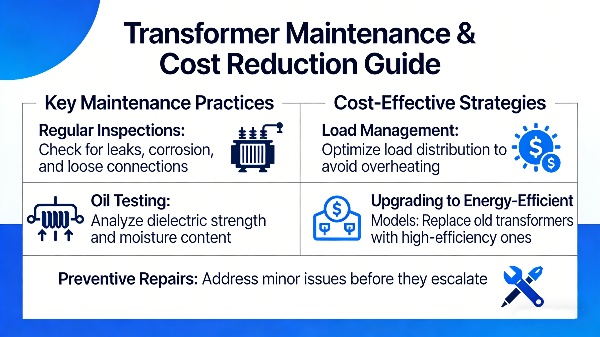
Transformer efficiency is not only determined by material quality but also by daily operation and maintenance. Poor maintenance can lead to increased losses, temperature rise, and even early failure. This article explains how to maintain transformer efficiency and reduce long-term costs with clear data.
Key Factors That Reduce Transformer Efficiency
- Overloading: Running above rated capacity increases loss by 20%–50%
- High Ambient Temperature: Reduces cooling efficiency and shortens life
- Poor Insulation: Causes partial discharge, leakage current
- Dirty Core or Windings: Increases heat by 10%–30%
How to Maintain High Efficiency
- Regular Temperature MonitoringKeep temperature rise within 65°C for dry-type and 55°C for oil-immersed types.
- Periodic InspectionCheck oil level, oil color, winding resistance, and noise.
- Control Load RateMaintain 70%–85% load for optimal efficiency.
- Keep Equipment CleanDust and dirt reduce heat dissipation by 15%–25%.
Efficiency Maintenance Comparison Table
| Item | Normal Maintenance | Poor / No Maintenance | Performance Impact |
|---|---|---|---|
| Annual Power Loss | ≤1.5% | ≥3.5% | Save 10%–20% of electricity cost |
| Service Life | 15–20 years | 8–12 years | Life extended by 5–8 years |
| Failure Rate | ≤0.5%/year | ≥3%/year | Risk reduced by 80% |
| Maintenance Cost | Low | High (frequent repair) | Save thousands annually |
Conclusion
Effective maintenance can reduce long-term costs by 15%–30% and extend service life significantly.
Jiangsu Unita Electric Equipment Co.,Ltd provides transformers with durable materials and easy maintenance design to help customers reduce costs.