 +86 15852255369
 sales@unitatransformer.com
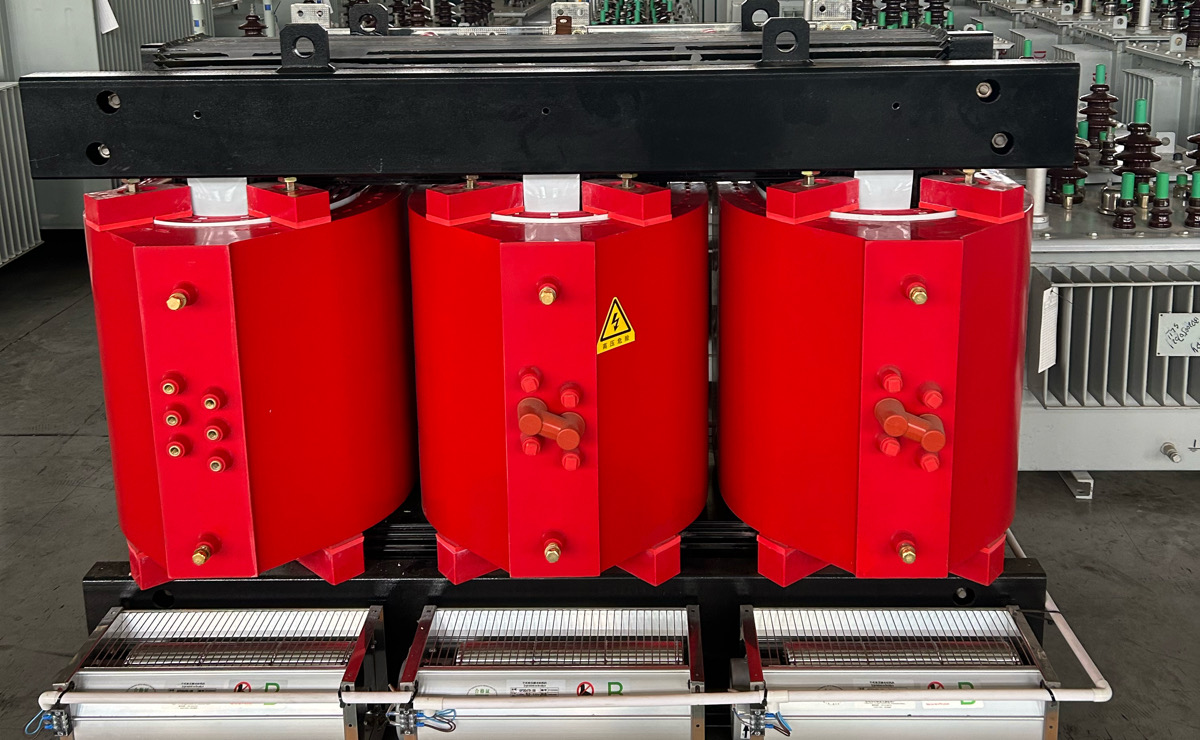
Dry-type transformers offer absolute safety with oil-free design and flame-retardant materials, completely eliminating fire risks. Their environmentally friendly maintenance-free feature requires no insulating oil and uses fully recyclable materials, achieving zero pollution during operation. They also deliver high energy efficiency with no-load losses over 30% lower than traditional transformers, perfectly meeting smart grid requirements. Additionally, their compact structure saves 50% installation space and supports wall-mounted and modular deployment.
Amid the dual waves of global energy transition and digital revolution, power equipment is undergoing unprecedented technological transformation. As core components of power distribution systems, dry-type transformers are becoming indispensable key equipment in smart grid construction due to their unique technical advantages. This article delves into the latest advancements in dry-type transformers regarding technological innovation, application expansion, and sustainable development.
I. Three Major Breakthroughs in Technological Innovation
- Intelligent Insulation System
Utilizing nano-composite epoxy resins and bio-based materials to achieve H/C class insulation ratings, mechanical strength is enhanced by 50% while the carbon footprint is reduced by 40%. The new generation of solid insulation materials features self-healing properties, extending equipment service life. - Digital Twin Technology
Integrated multi-parameter sensors (temperature, vibration, partial discharge, noise) enable real-time condition monitoring through edge computing. The digital twin platform predicts equipment lifespan with a fault accuracy rate of 99.5%. - Adaptive Cooling System
Innovative micro-channel liquid cooling combined with phase-change material composite heat dissipation achieves temperature control precision of ±0.5K and reduces energy consumption by 35%. Intelligent fans automatically adjust speed based on load, optimizing energy efficiency.
II. Comparative Advantages Over Traditional Equipment
| Feature | Oil-Immersed Transformers | Dry-Type Transformers |
|---|---|---|
| Safety Rating | Flammable, requires fire protection | Flame-retardant, no additional protection needed |
| Environmental Performance | Requires insulating oil disposal | Fully recyclable materials |
| Installation Space | Requires safety clearance | Wall-mounted, saves 50% space |
| Maintenance Cost | Annual maintenance cost 3-5% | 10-year maintenance-free design |
| Energy Efficiency | Meets China Energy Efficiency Level 3 | Achieves China Energy Efficiency Level 1 |
III. Six Innovative Application Areas
- New Energy Power Generation Systems
Critical for step-up tasks in 1500V photovoltaic power plants, withstands extreme temperature differences of ±50°C, with a service life of 25 years. - Data Center Power Supply
12-pulse rectifier design controls THDi below 3%, meeting stringent power quality requirements of Tier IV data centers. - Deep-Sea Wind Power Projects
Positive-pressure air-filled with IP68 corrosion resistance rating extends maintenance cycles to 5 years. - Rail Transportation
Dedicated seismic design applied in smart high-speed rail projects, vibration tolerance improved by 60%. - Industry 4.0 Factories
Integrated active filtering handles impacts from non-linear loads such as frequency converters and robots. - Space Power Systems
Vacuum-environment-specific models pass cosmic ray testing, successfully applied in space station projects.
IV. New Intelligent Selection Standards
- Full Lifecycle Assessment
Require suppliers to provide carbon footprint certification based on ISO14067, prioritizing carbon-neutral products. - Smart Connectivity Capability
Support industrial protocols such as IEC61850 and OPC UA to meet digital grid access requirements. - Harmonic Tolerance Level
K-factor ≥ 13, THDu tolerance < 5%, adaptable to modern power electronic loads. - Expandability Design
Reserve 20% capacity margin and smart interfaces to support future upgrades.
V. Technology Development Roadmap
- 2024-2026: Gallium nitride power devices, switching frequency increased to 200kHz
- 2027-2030: Mass production of superconducting amorphous alloy cores, no-load losses reduced to 5% of current levels
- 2031-2035: Blockchain-enabled autonomous systems participating in real-time virtual power plant scheduling
Conclusion
Dry-type transformers have evolved from simple power conversion devices into energy hubs integrating safety, intelligence, and low-carbon features. With the deep integration of new materials, artificial intelligence, and digital twin technologies, dry-type transformers are redefining the value standards of power equipment. For enterprises committed to energy transition and digital transformation, proactively adopting next-generation dry-type transformers will become a strategic choice for building future energy competitiveness.