 +86 18751738721
 sales@unitatransformer.com
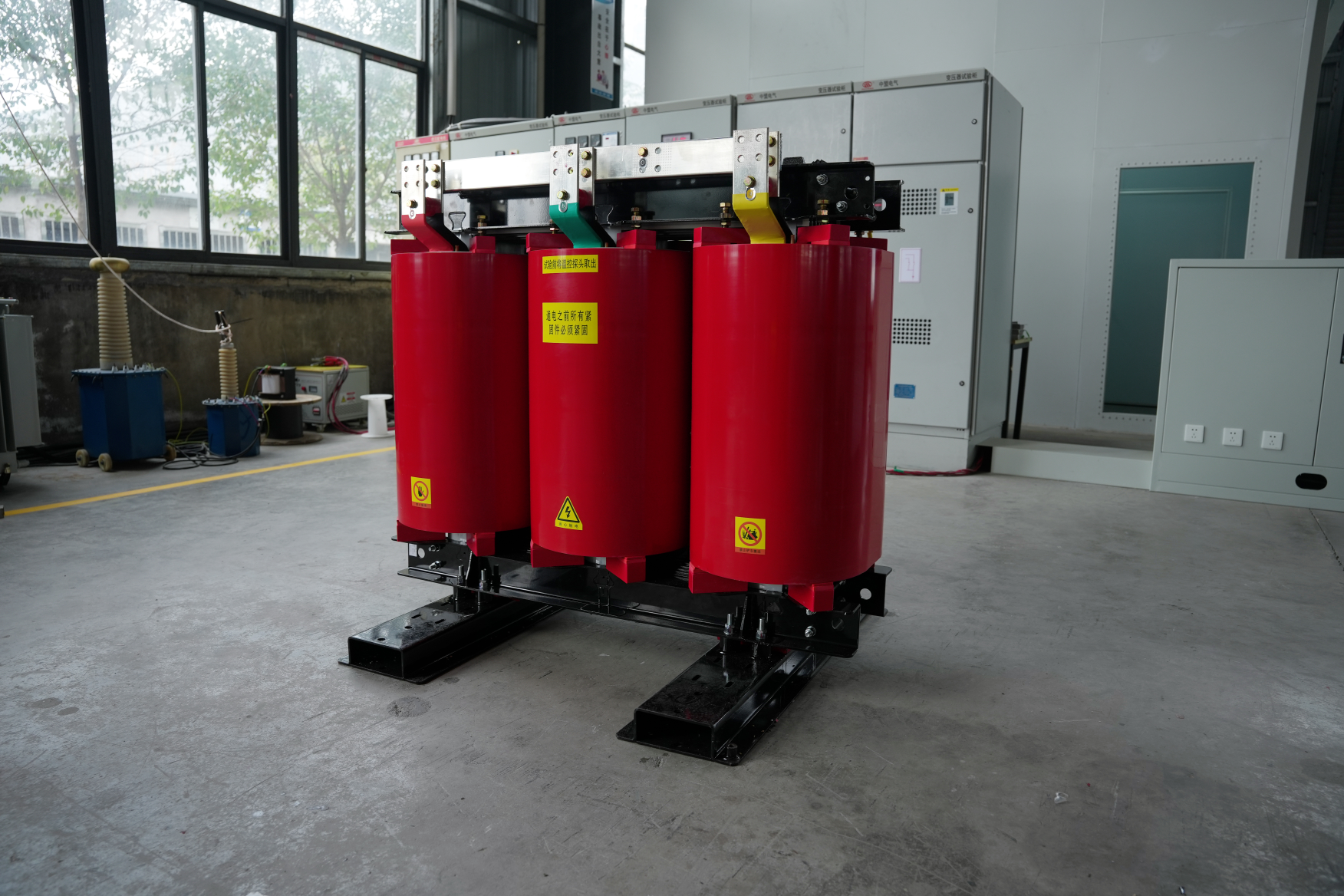
Residential power supply development is constantly expanding across Indonesia, covering suburban housing complexes, remote village settlements and coastal residential zones. Many electrical contractors and property developers struggle to decide between single-phase and three-phase transformers during project construction. Picking the wrong type will cause unstable household power supply, frequent tripping issues and extra renovation costs in the later stage.
Most local Indonesian transformer manufacturers provide both types of distribution transformers that comply with official PLN standards. Reputable suppliers such as PT Trafoindo Prima Perkasa, PT Sintra Sinarindo Elektrik, B&D Transformer and PT Mettakindo Dayakubus optimize their single-phase and three-phase products according to Indonesia’s tropical high-humidity climate, solving common pain points like damp insulation and overheating failure for residential scenarios.
Single-phase transformers are mainly designed for scattered villages and small residential clusters with low power consumption. They feature simple structure, lower procurement cost and easier daily maintenance, which is ideal for rural areas across Sumatra and Kalimantan with limited maintenance resources. Three-phase transformers are suitable for dense apartment complexes and large residential districts in Jakarta, Bandung and Surabaya; they can bear higher overall load and support simultaneous power consumption for dozens of households without voltage drop.
For property developers working on Indonesian housing projects, it is recommended to consult local manufacturers for customized suggestions. Local brands can adjust transformer capacity and sealing structure based on regional humidity, user quantity and PLN grid access rules, which is far more practical than generic imported transformers. Reasonable type selection can effectively reduce power loss and cut long-term maintenance pressure for residential power distribution systems.