 +86 18751738721
 sales@unitatransformer.com
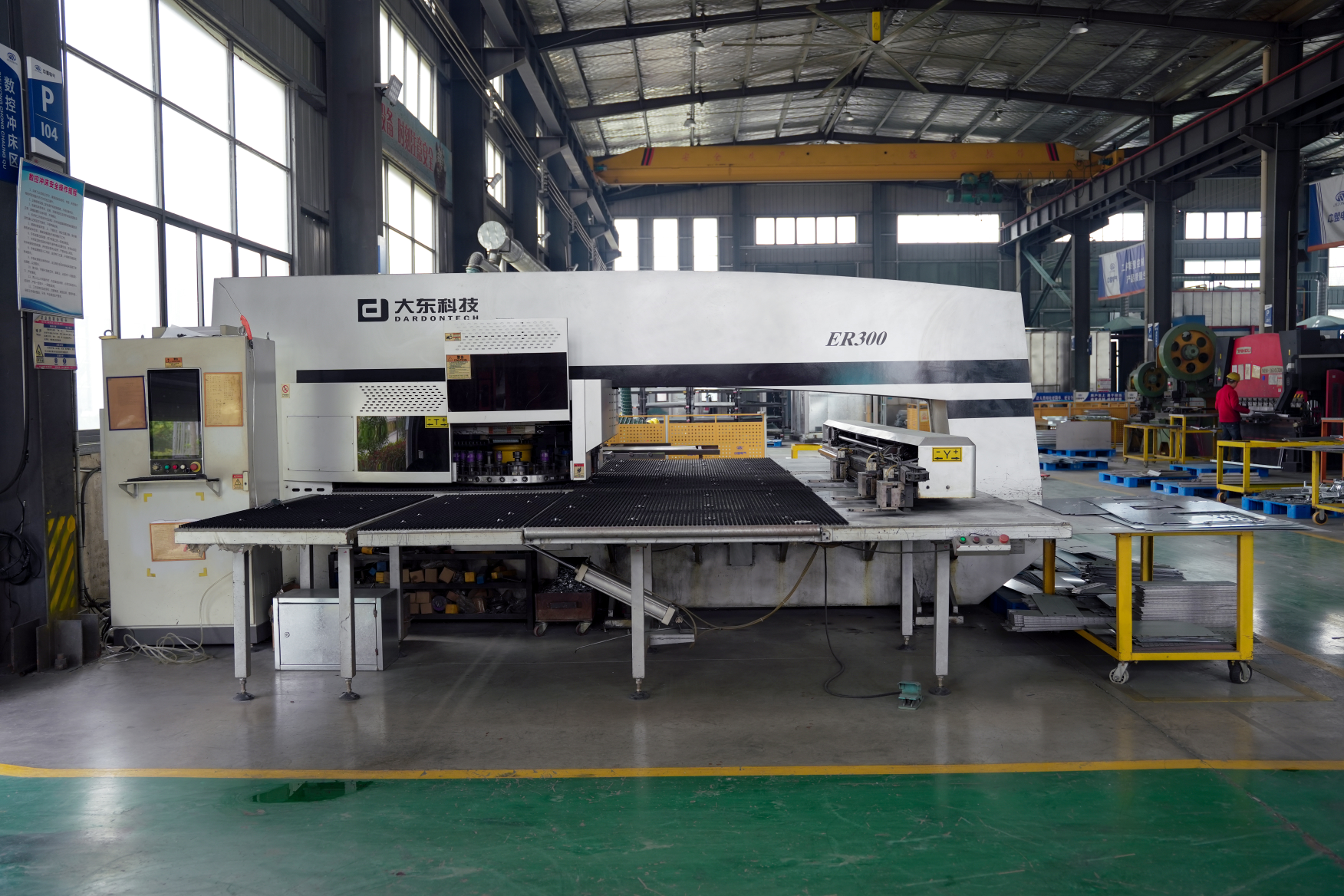
Distribution cabinets are indispensable core facilities in industrial parks, construction sites, rural power supply and commercial supporting projects across Southeast Asia. Different application scenarios have huge differences in environmental humidity, load demand, installation space and safety level requirements. Many purchasers only refer to price factors when selecting models, ignoring scenario matching, which leads to poor heat dissipation, insufficient protection level and frequent failure in later operation.
| Cabinet Type | Main Structural Features | Climate Adaptability | Suitable Application Scene |
|---|---|---|---|
| Indoor Low Voltage Cabinet | Compact structure, simple protection design, focus on internal wiring layout | Suitable for dry and ventilated indoor environment, poor anti-corrosion ability | Factory workshop, indoor substation, commercial building power distribution |
| Outdoor Waterproof Distribution Cabinet | Reinforced fully sealed structure, waterproof and dustproof shell, rainproof and sun protection design | Strong adaptability to high temperature, rain and humid climate | Outdoor construction site, street power distribution, rural outdoor substation |
| Stainless Steel Anti-Corrosion Cabinet | Whole body stainless steel material, anti-rust and anti-salt fog performance upgraded | Excellent for coastal salt fog, high humidity and corrosive environment | Coastal industrial zone, island engineering, seaside supporting facilities |
| Intelligent Metering Cabinet | Built-in metering and protection module, support real-time data monitoring | Adapt to conventional tropical climate, need regular inspection | Community residential area, public infrastructure, energy metering project |
In addition to type selection, the installation position of the distribution cabinet should avoid low-lying waterlogged areas and direct long-term sunlight. Regularly clean internal dust, check the tightness of wiring terminals and the aging degree of sealing strips, which can effectively prolong the service life and keep the power distribution system running stably all year round.