 +86 18751738721
 sales@unitatransformer.com
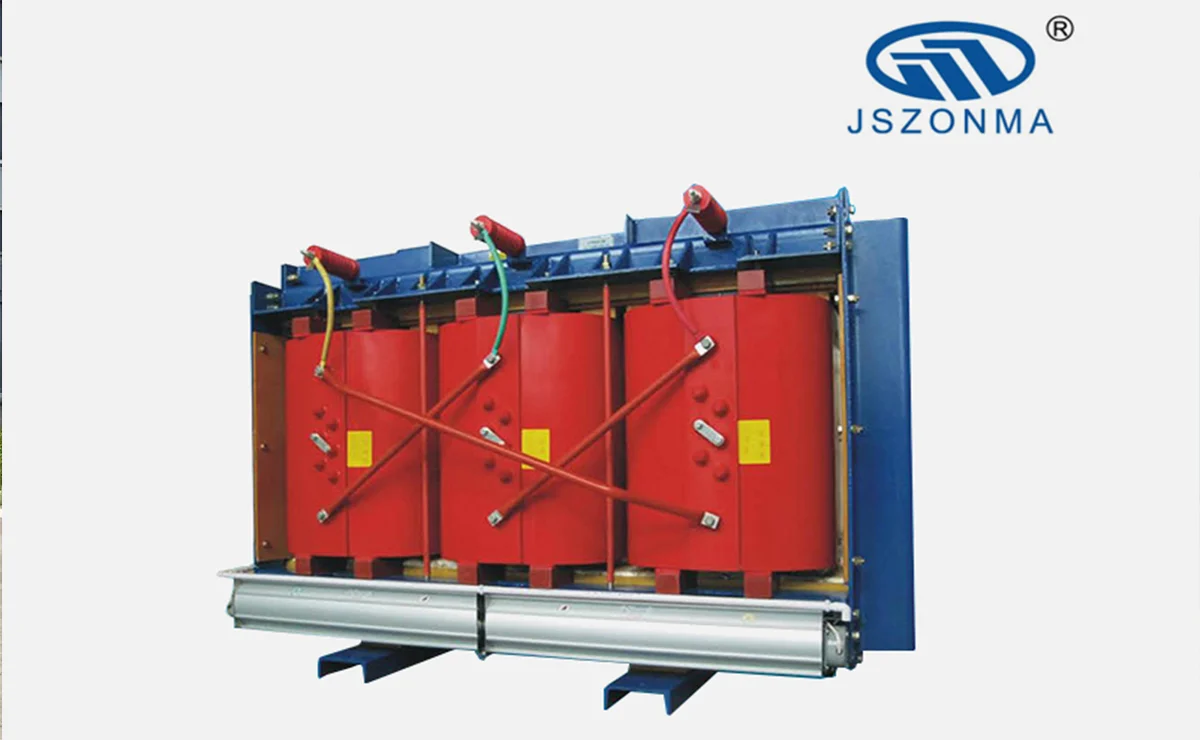
Overview
Dry Type Transformers, as representatives of environmentally friendly power equipment, are being driven by both increasingly stringent energy efficiency standards and technological innovations. According to the latest data from the International Electrotechnical Commission (IEC), global power transformer electricity consumption accounts for about 2-3% of total power generation, while dry type transformers can reduce no-load losses by over 40% through technological innovations. The EU Ecodesign Directive (EU 548/2014) and China’s GB 20052-2020 energy efficiency standards have introduced unprecedented high-efficiency requirements for distribution transformers, driving dry type transformers toward ultra-high efficiency, intelligence, and full lifecycle environmental protection. In 2024, the global market for high-efficiency dry type transformers is expected to reach $8.3 billion, with an annual growth rate of 8.7%.
Energy Efficiency Standard System Analysis
International Energy Efficiency Standards
Energy efficiency standards in major global regions are showing a tightening trend:
- IEC Standard System:
- IEC 60076-1: General requirements for power transformers
- IEC 60076-11: Particular requirements for dry type transformers
- IEC 60076-14: Application guide for environmental lifetime assessment
- European Standards:
- EN 50588-1:2017 Medium voltage dry type transformer energy efficiency requirements
- EU 548/2014 Ecodesign Directive: Three efficiency tiers (TIER Ⅰ, Ⅱ, Ⅲ)
- New TIER IV level added in 2023, requiring 15% further reduction in no-load losses
- North American Standards:
- IEEE C57.12.01: General requirements for dry type transformers
- DOE 2016 energy efficiency standards: 25% reduction in no-load loss limits for 10kV class transformers
Chinese Energy Efficiency Standards
GB 20052-2020 “Minimum allowable values of energy efficiency and energy efficiency grades for power transformers” establishes three energy efficiency grades:
- Grade 3 efficiency: Market access threshold
- Grade 2 efficiency: Energy-saving product certification requirements
- 1000kVA dry type transformer no-load loss ≤1050W
- Load loss ≤7500W (75℃)
- Grade 1 efficiency: Leader standard
- 1000kVA dry type transformer no-load loss ≤890W
- Load loss ≤6800W (75℃)
Environmental Features and Sustainable Development
Material Environmental Friendliness
The environmental advantages of dry type transformers are mainly reflected in material selection and manufacturing processes:
- Oil-free Design:
- Completely eliminates mineral oil leakage risk
- No oil processing equipment or recovery systems needed
- Recyclable Materials:
- Copper material recovery rate >99%
- Epoxy resin can be pyrolytically recycled
- Silicon steel sheet recovery rate >95%
- Green Insulation Materials:
- Bio-based epoxy resin (soybean oil extract)
- Water-soluble insulating paint (80% reduction in VOC emissions)
Carbon Footprint Analysis
Based on Life Cycle Assessment (LCA) methodology, dry type transformers have significantly lower carbon footprint than oil-immersed transformers:
- Manufacturing Phase:
- Carbon emissions of 15-25 tons CO₂ equivalent (1000kVA unit)
- 30-40% lower than oil-immersed transformers
- Operation Phase:
- Annual emission reduction of 2-3 tons CO₂ due to higher efficiency
- 40-60 tons CO₂ reduction over 20-year lifecycle
- End-of-Life Phase:
- 50% reduction in carbon emissions during recycling process
- 90% reduction in hazardous substance generation
Technological Innovation Trends
Material Innovations
- Amorphous Alloy Technology:
- 60-70% reduction in no-load losses
- 100% compliance with 1E grade efficiency
- 40% cost reduction since 2010
- Nano-composite Insulation Materials:
- Thermal conductivity increased to 1.2W/m·K
- 50% improvement in mechanical strength
- 30% extension in insulation life
- High-temperature Superconducting Materials:
- Experimental dry type transformer efficiency reaches 99.5%
- 80% reduction in load losses
- Expected commercial application by 2030
Design Innovations
- Topology Optimization Design:
- Finite Element Analysis (FEA) optimized magnetic circuit
- 20% reduction in leakage flux
- 5-8dB noise reduction
- Thermal Management Innovations:
- Phase Change Material (PCM) cooling systems
- Microchannel heat dissipation technology
- Intelligent fan control systems
- Modular Design:
- 50% reduction in installation time
- 40% lower maintenance costs
- Improved upgrade and retrofit convenience
Intelligent Operation and Maintenance Technologies
Condition Monitoring Systems
Modern dry type transformers integrate multiple sensors and monitoring functions:
- Temperature Monitoring:
- Fiber optic temperature measurement systems (±0.5℃ accuracy)
- Wireless temperature sensor networks
- Hotspot temperature prediction algorithms
- Electrical Parameter Monitoring:
- Online partial discharge monitoring (2pC sensitivity)
- Dielectric loss factor (tanδ) measurement
- Winding deformation diagnostics
- Environmental Monitoring:
- Humidity monitoring (±2%RH accuracy)
- Dust concentration detection
- Corrosive gas monitoring
Predictive Maintenance
Big data and artificial intelligence based predictive maintenance systems:
- Fault Prediction:
- 85% accuracy in remaining life prediction
- 30 days advance fault warning
- Intelligent Diagnostics:
- Multi-parameter fusion diagnostic algorithms
- Adaptive threshold adjustment
- Remote expert support systems
- Operation Optimization:
- Dynamic maintenance schedule adjustment
- Spare parts inventory optimization
- Real-time energy efficiency optimization
Market Applications and Case Studies
Typical Application Scenarios
- Data Centers:
- Requirements: Efficiency >99%
- Failure rate <0.1%
- Fast response to load changes
- Rail Transportation:
- Protection等级 IP65
- Excellent vibration resistance
- Compact design
- Offshore Platforms:
- Corrosion protection design
- Explosion-proof certification
- High reliability requirements
Success Cases
- Google Data Center:
- Uses 2.5MVA grade 1 efficiency dry type transformers
- Annual electricity savings exceeding 200,000 kWh
- PUE value reduced by 0.05
- Beijing Daxing Airport:
- 136 dry type transformers in network operation
- Comprehensive energy efficiency meets grade 1 standard
- Comprehensive intelligent monitoring system coverage
- Dubai Solar Park:
- Special dry type transformers for high temperature environments
- Full load operation at 55℃ ambient temperature
- Protection等级 IP56
Future Development Trends
Technology Development Directions
- Ultra-High Efficiency:
- 2025 target efficiency >99.5%
- 2030 target efficiency >99.7%
- Deep Digital Integration:
- Digital twin technology applications
- Blockchain technology for carbon footprint tracking
- Artificial intelligence for operation optimization
- New Material Applications:
- Two-dimensional insulation materials (e.g., boron nitride)
- Carbon nanotube reinforced composites
- Biodegradable insulation materials
Market Trends
- Policy Drivers:
- Over 30 countries will implement stricter energy efficiency standards
- Carbon border taxes promoting green procurement
- Cost Trends:
- High-efficiency product premium gradually narrowing
- Full lifecycle cost becoming key decision factor
- Application Expansion:
- New energy vehicle charging networks
- Hydrogen energy infrastructure
- Space power systems
Conclusion
Dry type transformers are at a critical period of technological breakthrough and market expansion. Continuously improving energy efficiency standards are driving technological innovation, while environmental advantages are gaining increasing market recognition. Over the next 5-10 years, with the maturation of new materials and processes and deep application of digital technologies, dry type transformers will reach new heights in efficiency, reliability, and intelligence, making important contributions to global energy transition and carbon neutrality goals.