 +86 18751738721
 sales@unitatransformer.com
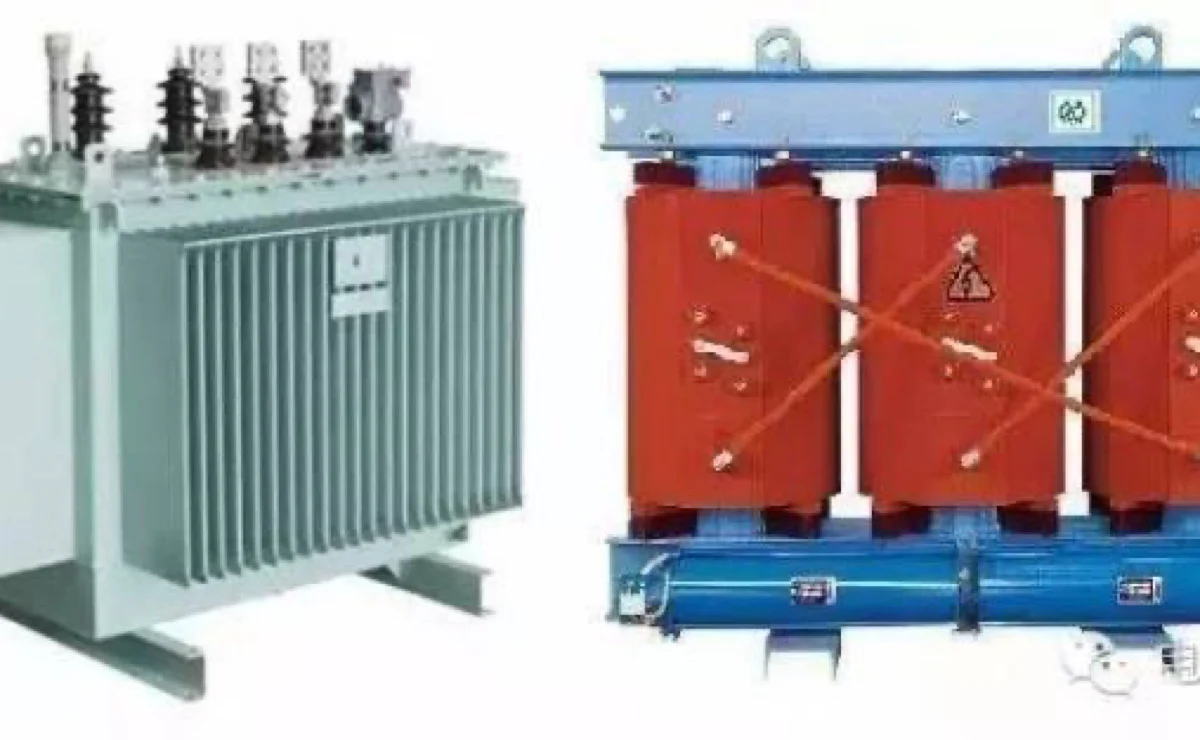
In the vast network of power transmission and distribution, transformers play an indispensable role as “voltage regulators.” Among various types of transformers, dry-type transformers have become a mainstream choice in commercial buildings, data centers, industrial plants, and renewable energy applications due to their outstanding safety, environmental friendliness, and reliability.
1. What Is a Dry-Type Transformer?
As the name suggests, a dry-type transformer is one in which the core and windings are not immersed in insulating oil. Instead, they are encapsulated with solid insulating materials (such as epoxy resin, Nomex paper, or fiberglass) and use air as the cooling medium. The most significant difference between dry-type transformers and traditional “oil-immersed transformers” is the absence of flammable insulating oil, fundamentally eliminating risks such as fire, explosion, and oil leakage.
Their primary cooling methods are air natural cooling (AN) or air forced cooling (AF). Heat generated during operation is dissipated through natural convection or forced circulation via fans, ensuring stable performance.
2. Core Features and Advantages
The widespread use of dry-type transformers is attributed to their notable advantages:
- High Safety: The oil-free design eliminates fire and explosion hazards, making them particularly suitable for indoor locations with stringent fire safety requirements, such as crowded shopping malls, hospitals, schools, and high-rise buildings.
- Environmental Friendliness: They contain no toxic substances like polychlorinated biphenyls (PCBs) and pose no risk of oil leakage contaminating soil or groundwater. Materials are also easier to recycle and dispose of at the end of their lifecycle.
- Easy Installation and Maintenance: Their compact structure and relatively light weight simplify installation, eliminating the need for separate oil pits and complex drainage systems, thereby saving civil engineering costs and space. Daily maintenance is minimal, typically involving only cleaning and fastener inspections.
- Exceptional Reliability: The use of high-quality insulating materials (e.g., Class H or C insulation) and advanced manufacturing processes (e.g., vacuum pressure impregnation, epoxy resin casting) provides strong short-circuit resistance, moisture resistance, and corrosion resistance, ensuring a long service life.
- Excellent Performance: Modern dry-type transformers exhibit significantly reduced no-load and load losses, resulting in notable energy savings. Many products meet the highest energy efficiency standards (e.g., China’s GB 20052 Level 1). Operational noise levels are also effectively controlled.
3. Main Application Areas
Thanks to these advantages, dry-type transformers are nearly irreplaceable in the following scenarios:
- Commercial and Public Buildings: Power distribution in densely populated areas such as office buildings, shopping centers, hotels, hospitals, schools, airports, and subway stations.
- Industrial Manufacturing: Industrial environments with flammable, explosive, or corrosive gases, such as chemical plants, mines, and ships.
- Data Centers and Critical Facilities: Server rooms, financial centers, and communication base stations where power supply continuity and safety are paramount.
- Renewable Energy Generation: Step-up systems for wind and solar photovoltaic power plants, owing to their environmental friendliness and suitability for outdoor installation in containerized substations.
- Rail Transportation: Traction power supply and station power lighting systems for subways and high-speed railways.
4. How to Choose the Right Dry-Type Transformer?
When selecting a dry-type transformer, consider the following key factors:
- Capacity (kVA): Determine based on the total calculated load and future expansion needs to avoid underloading or overloading.
- Voltage Level: Specify the input (primary) and output (secondary) voltage requirements.
- Energy Efficiency Class: Choose products that meet or exceed national energy efficiency standards (e.g., China’s GB 20052). Although the initial investment may be higher, long-term energy savings are substantial.
- Protection Level (IP Code): Select based on the installation environment. For dusty environments, IP20 (protection against solid objects) or higher is required; for outdoor or humid environments, IP23 or higher is necessary.
- Insulation Class (e.g., Class F, H): Higher insulation classes indicate better temperature resistance, overload capacity, and longer lifespan.
- Noise Level (dB): For installations near offices or noise-sensitive areas, choose low-noise models.
- Brand and After-Sales Service: Opt for reputable brands with strong technical expertise and reliable after-sales support.
5. Future Development Trends
With technological advancements, dry-type transformers are evolving in the following directions:
- Higher Energy Efficiency: Use of new materials and processes, such as amorphous alloy cores, to further reduce no-load losses, aligning with global energy conservation trends.
- Enhanced Intelligence: Integration of online monitoring sensors for temperature, humidity, and partial discharge, enabling real-time status awareness, fault prediction, and smart diagnostics through IoT technology for digital substations.
- New Material Applications: Development and use of more environmentally friendly and high-performance bio-based or new solid insulating materials.
- Miniaturization and Lightweighting: Optimization of design and materials to reduce size and weight without compromising performance, facilitating transportation and installation.
Conclusion
With their safety, cleanliness, reliability, and efficiency, dry-type transformers perfectly meet the stringent demands of modern urban development and industrial construction for power equipment. They are not only the “invisible guardians” of our daily lives but also critical infrastructure for advancing green energy and smart grids. As technology continues to innovate, dry-type transformers will undoubtedly continue to play a vital role in the future power landscape.