 +86 18751738721
 sales@unitatransformer.com
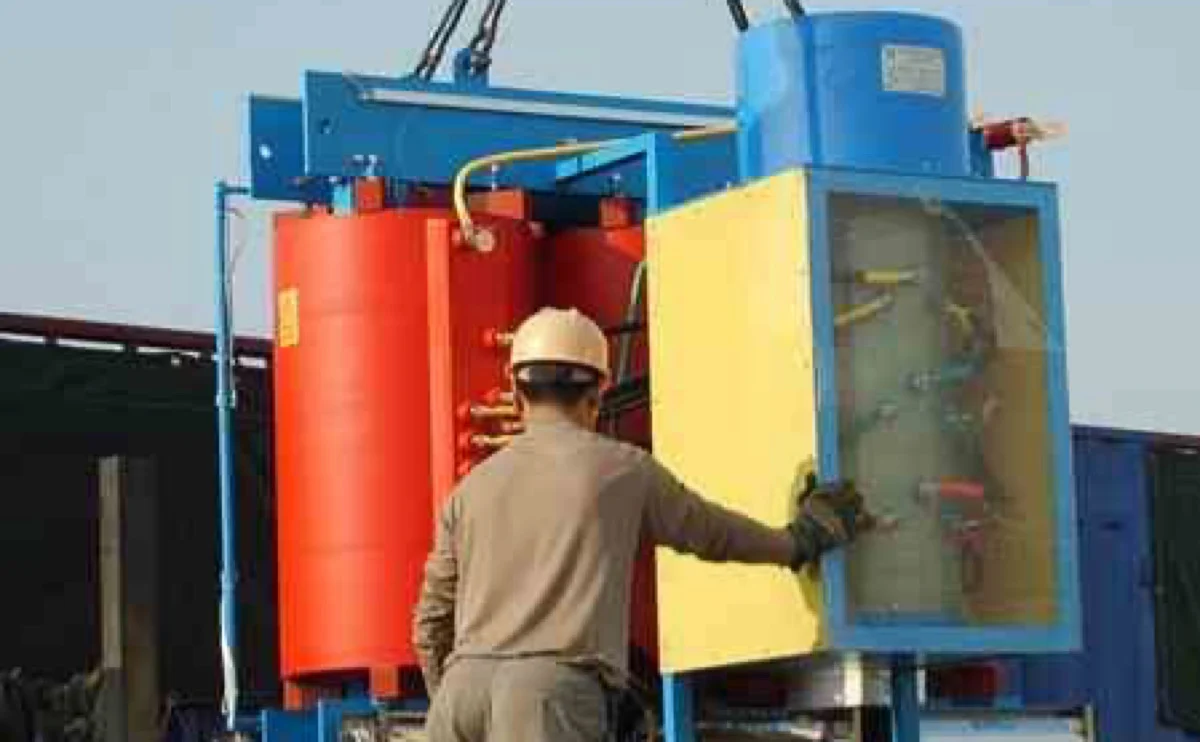
In today’s field of power distribution and transmission, dry-type transformers have become the preferred equipment in commercial buildings, data centers, hospitals, schools, and industrial applications due to their outstanding safety and environmental features. Unlike traditional oil-immersed transformers, dry-type transformers use air or solid insulation materials for cooling and insulation, completely eliminating the risks of fire and environmental pollution.
What is a Dry-Type Transformer?
A dry-type transformer is a type of transformer that does not use liquid (such as mineral oil) as a cooling and insulating medium. Its core and windings are enclosed in a robust protective housing, relying on air self-cooling or forced air cooling (via fans) for heat dissipation. The windings are typically vacuum cast with epoxy resin or use wrap insulation, forming a solid insulation layer with extremely high mechanical strength and electrical insulation performance.
Core Advantages and Keywords of Dry-Type Transformers
- High Safety, Fire Retardant
- Keywords:
fire-proof transformer,safe and eco-friendly,flame retardant - Since they require no flammable insulating oil, dry-type transformers fundamentally avoid the risks of explosion and fire. They are particularly suitable for indoor installation sites with极高 safety requirements, such as high-rise buildings, subways, tunnels, and densely populated areas.
- Keywords:
- Environmentally Friendly and Non-Polluting
- Keywords:
eco-friendly transformer,non-polluting,non-toxic - They contain no toxic substances or PCBs (polychlorinated biphenyls), and there is no risk of oil leakage, resulting in zero pollution to soil and water sources. Their materials are also easier to recycle at the end of their life cycle, aligning with global green trends.
- Keywords:
- Easy Maintenance, Low Operating Costs
- Keywords:
maintenance-free,low operating costs,high reliability - The structural design of dry-type transformers greatly simplifies daily maintenance, enabling maintenance-free or low-maintenance operation. Users do not need to worry about complex procedures such as oil level monitoring, oil sample testing, and oil filtration, significantly reducing operating costs over the entire lifecycle.
- Keywords:
- Excellent Electrical Performance
- Keywords:
high reliability,strong short-circuit withstand capability,low losses,energy saving - Modern dry-type transformers use high-quality silicon steel sheets and advanced insulating materials like NOMEX®, featuring low losses, low noise, energy saving, and strong short-circuit resistance. Their moisture resistance and overload capacity are specially optimized to adapt to various harsh operating environments.
- Keywords:
- Flexible Installation, Space-Saving
- Keywords:
compact design,indoor installation,easy installation - Due to their compact design and lightweight structure, dry-type transformers can be flexibly installed in electrical rooms close to load centers, reducing cable length and line losses, thereby improving power supply quality.
- Keywords:
Main Application Scenarios
- Commercial and Public Buildings: Power distribution systems in office buildings, shopping malls, hotels, hospitals, and schools.
- Industrial Sector: Industrial environments with strict fire safety requirements, such as chemical plants, mines, and offshore platforms.
- Infrastructure: Traction power supply for airports, subways, tunnels, bridges, and rail transit.
- New Energy and High-Tech: Photovoltaic power stations, wind power farms, data centers (dedicated computer room transformers), and UPS systems.
How to Choose the Right Dry-Type Transformer?
When selecting a dry-type transformer, the following factors need to be considered:
- Capacity (kVA): Determined based on the total load power and future development reserves.
- Voltage Level (Primary/Secondary Voltage): Matches the voltage requirements of the grid and electrical equipment.
- Insulation Class (e.g., Class F, Class H): Determines the transformer’s temperature tolerance and overload margin.
- Protection Level (IP Code): Select the housing’s protection capability based on the installation environment (e.g., dust, moisture).
- Energy Efficiency Standards: Choose high-efficiency and energy-saving products that meet or exceed Chinese energy efficiency standards (e.g., GB 20052) or EU standards (e.g., IE4, IE5) to reduce long-term operating electricity costs.
Conclusion
In summary, with their significant advantages of being safe and eco-friendly, maintenance-free, highly reliable, and energy-efficient, dry-type transformers are gradually replacing traditional oil-immersed transformers worldwide, becoming the cornerstone of modern intelligent power distribution networks. Whether for new projects or green retrofits of old equipment, choosing a suitable dry-type transformer is a wise decision to ensure the safe, stable, and economical operation of the power system.